
The landscape of modern education is undergoing a seismic shift, moving away from the industrial-age model of rote memorization and standardized testing toward a dynamic, skill-based ecosystem. This transformation is not merely a trend; it is a necessary evolution driven by the rapid integration of Artificial Intelligence (AI) into every facet of our lives. As AI begins to handle routine cognitive tasks, the value of human labor—and therefore the purpose of education—is shifting toward high-level problem solving, emotional intelligence, and technical agility.
For the modern student, this means that "knowing" is no longer enough; "doing" and "adapting" are the new benchmarks for success. The transition toward a skills-based curriculum focuses on what a student can do with the information they possess. In an era where any fact can be summoned in seconds by a large language model, the educational focus is pivoting toward critical thinking, synthesis, and the ability to navigate complex systems. This shift aims to produce graduates who are not just knowledgeable, but capable of thriving in a volatile, uncertain, and technology-driven global economy.
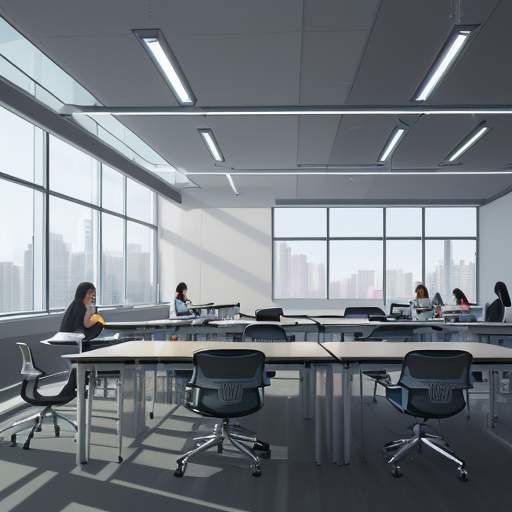
The Decline of Rote Memorization and the Rise of Critical Thinking
For decades, the primary metric of academic success was the ability to retain and recall information. Students were judged on their capacity to memorize dates, formulas, and definitions. However, in the age of AI, this model is becoming obsolete. When an AI can instantly provide a historical summary or solve a complex calculus equation, the "memorization" phase of learning can be bypassed in favor of the "application" phase.
The Skills Revolution demands that students move up the Bloom’s Taxonomy pyramid—moving away from "remembering" and "understanding" toward "analyzing," "evaluating," and "creating." Instead of asking a student to define "sustainability," an AI-integrated curriculum asks them to use AI tools to model the environmental impact of a local manufacturing plant and propose a three-year transition plan. By doing so, the student learns to use technology as a lever, amplifying their own capabilities rather than being replaced by it. This shift forces students to engage with the why and how of a subject, rather than just the what.
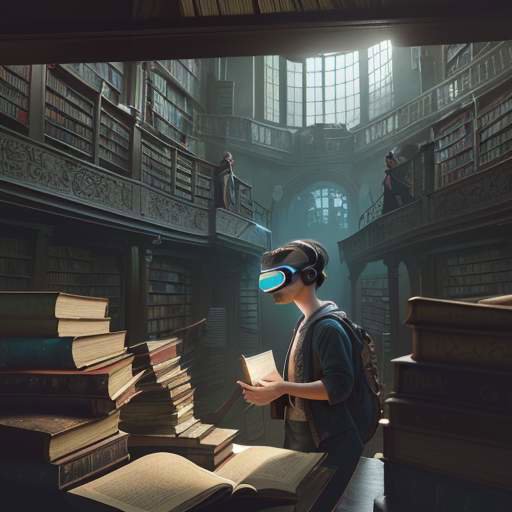
Hyper-Personalized Learning Paths through AI Integration
One of the most profound impacts of AI on education is the ability to provide personalized learning at scale. In a traditional classroom, a teacher must often teach to the "middle," potentially leaving advanced students bored and struggling students behind. AI-driven platforms change this dynamic by analyzing a student’s performance in real-time, identifying specific gaps in knowledge, and adjusting the curriculum accordingly.
These adaptive systems act as personal tutors, offering different explanations, practice problems, and content types based on how an individual student learns best. For example, a student struggling with physics concepts might be offered a visual simulation, while another might receive a deep-dive text analysis. This creates a "mastery-based" path where students do not move forward until they have truly grasped a concept. By integrating AI, the education system can cater to the unique cognitive profiles of millions of students simultaneously, ensuring that every learner reaches their full potential at their own pace.

The Human Edge: Cultivating Soft Skills in an Automated World
As machines become more capable of performing technical tasks, the value of "human-centric" skills—often called soft skills—skyrockets. These include empathy, ethical judgment, leadership, and complex collaboration. In a world where AI can write code or draft legal documents, the human ability to navigate the nuances of human emotion and social dynamics becomes the ultimate competitive advantage.
Modern education must prioritize these skills as core components of the curriculum. This means moving away from isolated study toward project-based learning (PBL). In a PBL environment, students work in teams to solve real-world problems, requiring them to negotiate, resolve conflicts, and communicate their ideas clearly. They learn to manage projects, lead their peers, and make ethical decisions when faced with gray areas. By fostering these skills, educators prepare students not just to work alongside machines, but to lead the teams that direct them.

Micro-Credentials and the Shift Toward Modular Education
The traditional four-year degree is being challenged by the need for "just-in-time" learning. In many industries, the pace of technological change is so rapid that a degree earned in 2020 might already be outdated by 2024. To combat this, the education sector is moving toward micro-credentials and modular certifications.
These are short, intensive courses designed to teach specific, high-demand skills—such as prompt engineering, data visualization, or specialized nursing certifications. This approach allows students to stack "badges" of competence as they progress in their careers. It empowers the learner to customize their education based on current market demands. When integrated with AI, these programs can be updated almost instantly to reflect new technologies. This creates a more agile workforce where learners can pivot into new roles quickly by acquiring specific modules rather than spending years retraining for a broad degree that may no longer align with the job market.
Cultivating Adaptability: The Ultimate Skill for the 21 = Century
The most critical skill a student can develop in the age of AI is "meta-learning"—the ability to learn how to learn. Because the job market is becoming increasingly fluid, the most successful students will be those who can identify a new problem, research the necessary tools to solve it, and master those tools in a short timeframe.
Education must therefore move away from producing "specialists" who only know one trade and toward "polymaths" who are comfortable with ambiguity. This involves teaching students how to think critically about the information they receive from AI, how to verify sources, and how to iterate on their own ideas. Instead of a static education that ends at graduation, the modern system aims to provide a continuous loop of learning. By fostering a growth mindset and a passion for lifelong learning, we empower students to remain relevant regardless of how many times the technological landscape shifts.

Conclusion: Embracing the New Frontier
The transition toward AI-integrated, skill-based education is not about replacing human intelligence with machine logic; it is about augmenting human potential. By shifting the focus from the memorization of facts to the mastery of skills—critical thinking, emotional intelligence, and adaptive learning—we can prepare students for a world that is moving faster than ever before.
The future belongs to the learners who can bridge the gap between human creativity and machine capability. By embracing this revolution, educational institutions can move beyond the constraints of the past and create a pathway for students to not only survive in the modern economy but to lead it. The goal is to create a generation of thinkers who see AI as a tool, knowledge as a foundation, and their own unique human perspective as their greatest asset.


















Recent Comments