
A University of California, Berkeley professor has officially stopped grading students’ homework for accuracy due to concerns that an ai tool is making it increasingly difficult for educators to use traditional written assignments to assess student abilities. Richard Borcherds, a mathematics professor at UC Berkeley who won the Fields Medal in 1998, announced this shift following the realization that generative ai can now solve many undergraduate mathematics problems, often performing better than the students themselves.
By shifting his grading criteria, Borcherds now awards credit based on whether students complete their homework on time rather than whether the answers are correct. This decision highlights a significant ai change in how academic institutions verify student understanding. Borcherds told Newsweek that because it is difficult to distinguish between a student’s own work and an ai model output, grading for correctness creates a "huge incentive" for students to use AI and potentially penalizes those who choose to be honest.

The Challenge of Assessing Students in an AI-Driven Era
The rise of ai in education has forced a reevaluation of traditional pedagogical methods. Borcherds noted that while students have always had access to outside help, the current ai revolution makes it significantly easier to bypass the learning process. For mathematics and other technical subjects, the stakes are particularly high because the core goal of homework is to develop underlying reasoning and problem-solving skills.
When an ai tool can provide a correct answer instantly, the homework ceases to be a valid method for evaluating what a student actually understands. Eric Klopfer, a professor at MIT who co-chaired the university’s Ad Hoc Committee on AI Use in Teaching, Learning, and Research Training, echoed these concerns. He stated that at this point, for some students, homework is no longer a valid evaluation of their learning.
However, Klopfer warned that simply removing the weight of homework from a grade could create secondary issues. If homework no longer impacts the final grade, students might put less effort into the assignments, even though those tasks still provide a valuable educational experience. To solve this, Klopfer suggested a new "social contract" in education where students take more responsibility for their own learning and faculty place more trust in them.
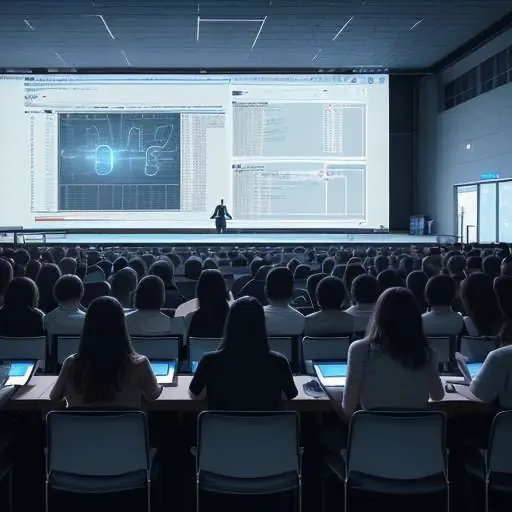
Why Traditional Grading is Failing in Mathematics
The specific impact on the field of mathematics has prompted Richard Borcherds to reconsider the future of the profession. He noted that five years ago, he believed mathematics was relatively protected from the rapid advances seen in other fields. However, the current pace of development means that in a few years, there may be nothing human mathematicians can do that an ai model cannot do better.
Borcherds expressed uncertainty regarding what advice to give students considering a career in mathematics. He even consulted ChatGPT on the matter, noting that the AI could not provide a definitive answer on what the future holds for human mathematicians. This uncertainty stems from the fact that AI can now solve complex problems with such accuracy that it is rarely possible to spot "characteristic errors" that once helped instructors identify machine-generated content.
The shift toward completion-based grading is one way to manage this reality. By focusing on whether a student submits work, Borcherds aims to reduce the incentive to use an ai tool just to get a high grade, while still requiring students to master the material to perform well on in-person examinations. For those navigating the transition from high school to college, it is important to know that these tips for the transition can help manage the increased demands of higher education.
The Move Toward In-Person and Oral Assessments
As digital assessments become harder to verify, many educators are pivoting toward methods that require a physical presence. Borcherds has turned to traditional, in-person examinations where students are prohibited from using electronic devices. He noted that online examinations have lost much of their effectiveness because students can use ai tool applications to find answers.
He observed that average scores on online exams had risen substantially, making it difficult to gauge true proficiency. In contrast, in-person exams "still work fine for assessing students." This shift is part of a broader trend where institutions are looking for ways to ensure students develop the actual skills intended by the curriculum. While some may worry about the loss of digital flexibility, many find that the future of learning is being reshaped by a more intentional use of technology to support, rather than replace, human instruction.

Institutional Responses and the Role of Detection Software
University systems are also grappling with how to define the boundaries of acceptable use. At UC Berkeley, the university has issued guidance asking faculty to clearly communicate their expectations regarding AI in their syllabuses. This includes specific rules governing which ai tool can be used and when.
The university has also investigated various options for monitoring student work. However, they have not adopted a universal solution. Specifically, the university examined ai detector platforms such as Turnitin and Rumi but reportedly did not find them sufficiently reliable to be implemented as a standard across the entire campus. Because of these limitations, individual instructors must decide how to manage the integration of technology in their specific classrooms.

The Broader Impact on Academic Integrity
The widespread use of generative ai is not just a concern for mathematics professors; it is a systemic issue affecting the validity of academic credentials. A study conducted by Cornell University in May involved more than 95,000 students across 20 U.S. public research universities. The study found that 37 percent of these students reported using generative ai at least monthly, while 9 percent admitted to using it to cheat.
Rene Kizilcec, an associate professor at Cornell and co-author of the study, emphasized that "assessment reform is necessary and urgent." He argued that the misuse of ai tool applications creates a direct problem for the validity of assessments and, consequently, the credibility of university credentials. This sentiment underscores why professors like Borcherds are moving toward completion-based grading; it is a practical response to a situation where the "truth" of a written assignment can no longer be verified with certainty.

Preparing for an AI-Aware World
The ultimate goal for many educators is to ensure that students still develop the underlying reasoning and problem-solving skills that traditional coursework is intended to teach. A 2026 report from MIT’s Ad Hoc Committee on AI Use in Teaching, Learning, and Research Training found that ai tool integration is forcing the university to reconsider fundamental aspects of education.
The committee advised instructors to adapt their teaching and assessment processes for an "AI-aware world." They emphasized that generative ai should supplement human learning rather than automate it. This transition may take time; Borcherds suggested that university mathematics departments might need several years to respond effectively to the rapid pace of development, especially as resistance to change within academic institutions can slow the process.
For students, this means a shift in how they engage with their coursework. While some programs may still allow for the use of an ai tutor or other support systems, the focus will increasingly be on what a student can demonstrate in person. As universities navigate these changes, some are even exploring if different formats might better serve students in an era where digital information is instantly accessible.
Conclusion
The decision by a UC Berkeley professor to stop grading for accuracy is a practical response to the realities of the ai revolution. By moving to completion-based grading, Borcherds aims to preserve the educational value of homework while acknowledging that ai tool capabilities make it nearly impossible to verify the origin of every correct answer. This shift reflects a broader movement toward in-person assessments and "AI-aware" teaching methods designed to protect the integrity of academic credentials. As institutions continue to adapt, the focus remains on ensuring that students develop the critical thinking skills necessary for their future careers, regardless of how much ai tool technology evolves.
Sources
- Berkeley Professor Stops Grading Homework Over AI—How Teachers Are Adapting, newsweek, 2026-10-26
- US Berkeley prof. stops grading students’ homework over AI use: ‘No point’ as students score top marks; how it happened?, livemint, 2026-10-26















Recent Comments