
“What’s your major?” is one of the first questions college students hear, and choosing one can feel like deciding your whole future. In reality, many students change their major at least once, and many careers are open to graduates from different fields. Still, a thoughtful choice saves time, money and frustration.
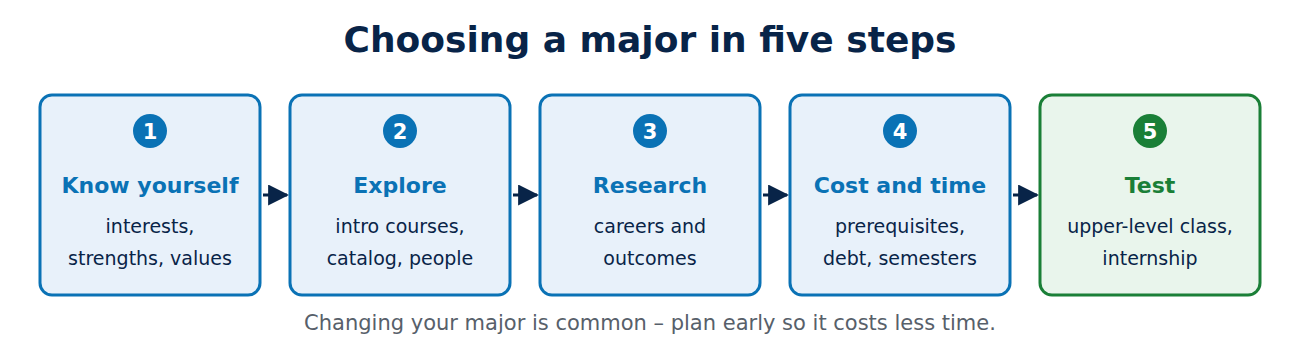
This guide offers a step-by-step way to choose a college major: knowing yourself, exploring options, checking career outcomes and costs, and testing your choice before you commit.
How much does your major matter?
It depends on the field. Some careers require a specific degree: nursing, engineering, accounting, teaching or pre-med paths with fixed prerequisites. Many others, from management and marketing to government and nonprofits, hire graduates from a wide range of majors and care more about skills, internships and experience. Your major matters, but less than many students fear.
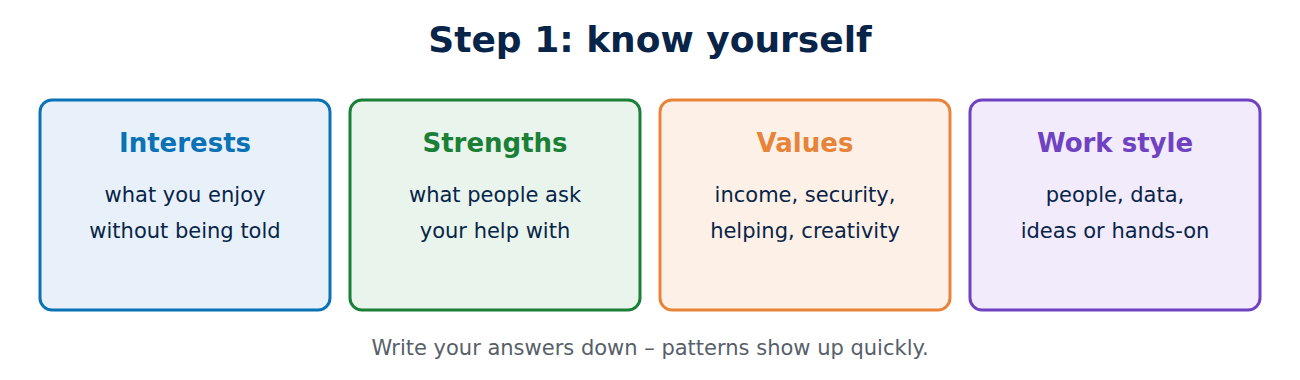
Step 1: know yourself
- Interests: which classes, topics and activities do you enjoy even when nobody makes you?
- Strengths: where do you do well, and what do people ask your help with?
- Values: income, security, helping others, creativity, flexibility, location?
- Work style: do you prefer people, data, ideas or hands-on work?
Your campus career center often offers free assessments, such as interest inventories, that can spark ideas.
Step 2: explore options
- Take introductory courses in two or three fields during your first year, especially as general education requirements.
- Read the course catalog: look at the required courses for majors you are considering, not just the title.
- Talk to people: professors, advisors, upper-level students and graduates in the field.
- Visit department events and student clubs related to the major.
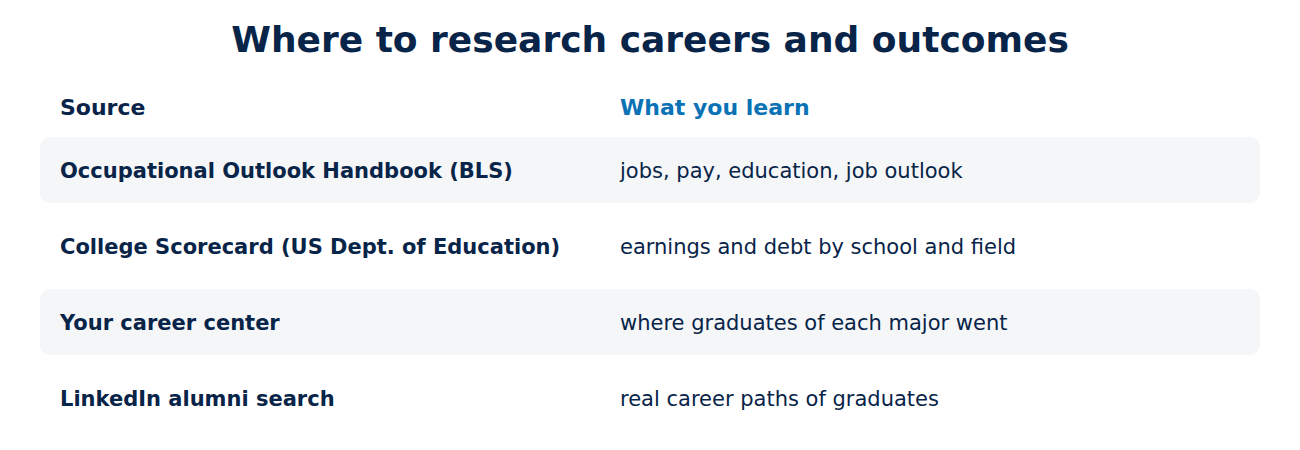
Step 3: research careers and outcomes
- Occupational Outlook Handbook (US Bureau of Labor Statistics): typical jobs, pay, required education and job growth.
- College Scorecard (US Department of Education): earnings and debt of graduates by school and field of study.
- Your career center: where graduates of each major from your school went to work.
- LinkedIn: look up alumni of your college who studied the major and see their career paths.
Step 4: consider cost and time
- Some majors have long prerequisite chains or require extra semesters; check the four-year plan.
- Some programs have competitive admission after the first year.
- Think about the balance between expected earnings and student debt, especially if you plan graduate school.
Step 5: test before you commit
- Take one or two upper-level courses in the field.
- Do an internship, job shadowing or a research project; see how to write an internship cover letter.
- Volunteer or work part-time in a related setting.
Double majors, minors and changing majors
- Minor: a good way to add a second interest or practical skill (for example data analysis, a language or business) without the full workload.
- Double major: possible if the requirements overlap or you plan carefully, but it can limit electives and free time.
- Changing majors: common and often wise. Change early, meet your advisor, check which credits transfer to the new major and whether it affects your graduation date or financial aid.
Mistakes to avoid
- Choosing only for a parent’s expectations or a friend’s choice.
- Choosing only by expected salary, without interest or ability.
- Avoiding a field you love because of one difficult class.
- Waiting too long to decide when your target major has prerequisites.
Frequently asked questions
When do I have to declare a major?
At many US colleges, by the end of the second year. Programs with long prerequisite sequences, such as engineering or nursing, may require an earlier decision, so check your college catalog.
Is it bad to change majors?
No. Many students change at least once. Changing early limits extra semesters; meet your advisor to see which credits count toward the new major.
Does my major decide my career?
For some fields, such as nursing, engineering or accounting, yes. For many others, employers care as much about skills, internships and experience as about the major itself.
Conclusion
To choose a college major, start with your interests, strengths and values, explore fields through introductory courses and conversations, research careers and outcomes with the Occupational Outlook Handbook and College Scorecard, and check the time and cost of each program. Test your choice with upper-level classes and internships, and remember that minors, double majors and changing majors are all normal options. Your GPA in the chosen field matters too; see how to calculate your GPA.
Sources and further reading
- Occupational Outlook Handbook (US Bureau of Labor Statistics)
- College Scorecard (US Department of Education)



















Recent Comments