
Starting college often means starting over socially: new city, new people, and everyone else seems to have found their group in the first week. In reality, most first-year students feel lonely at some point, and friendships take time to form. The good news is that making friends in college follows predictable patterns, and you can use them on purpose.
This guide gives practical ways to meet people, turn acquaintances into friends, and handle the times when it feels hard, including tips for introverts, commuters and online students.
Why it feels hard (and why that is normal)
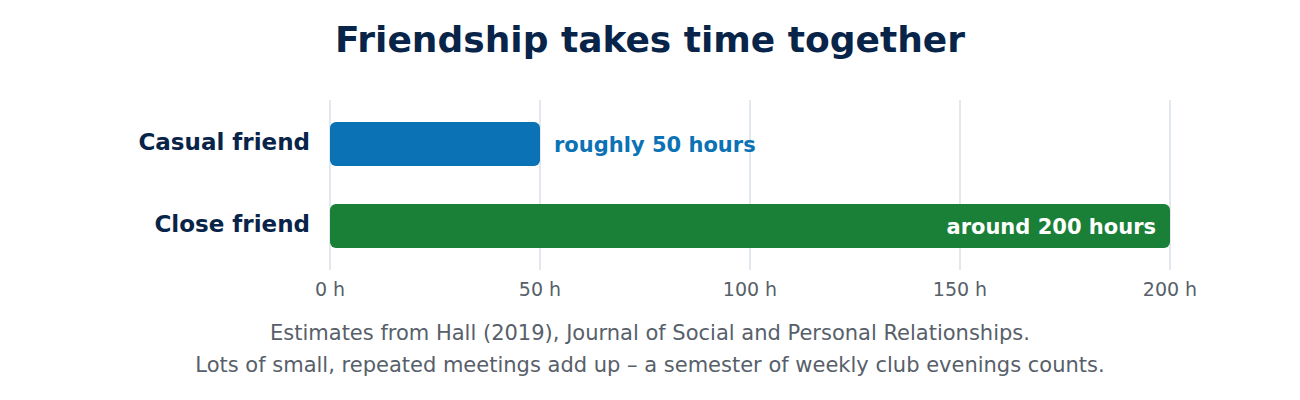
Friendships need repeated contact and time. Research by communication scholar Jeffrey Hall estimated that it takes roughly 50 hours together to move from acquaintance to casual friend, and around 200 hours for a close friendship. So the feeling that “everyone else already has friends” in October is usually wrong: most people are still building them.
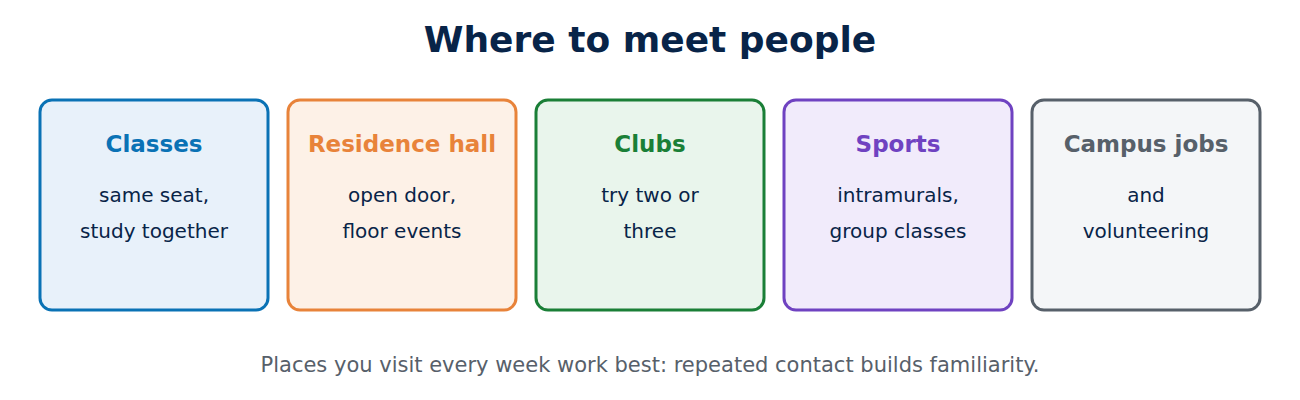
Where to meet people
- Your classes: sit in the same place, talk to the people next to you, suggest studying together before an exam.
- Your residence hall: leave your door open when you are in, join floor events, eat in the dining hall instead of in your room.
- Clubs and student organizations: go to the activities fair and try two or three clubs related to your interests, culture, faith or major.
- Sports and fitness: intramural teams, running clubs, climbing walls and group classes.
- Campus jobs and volunteering: working side by side creates easy friendships; see how to make money as a student.
- Study groups and group projects: see group project tips.
Turn acquaintances into friends
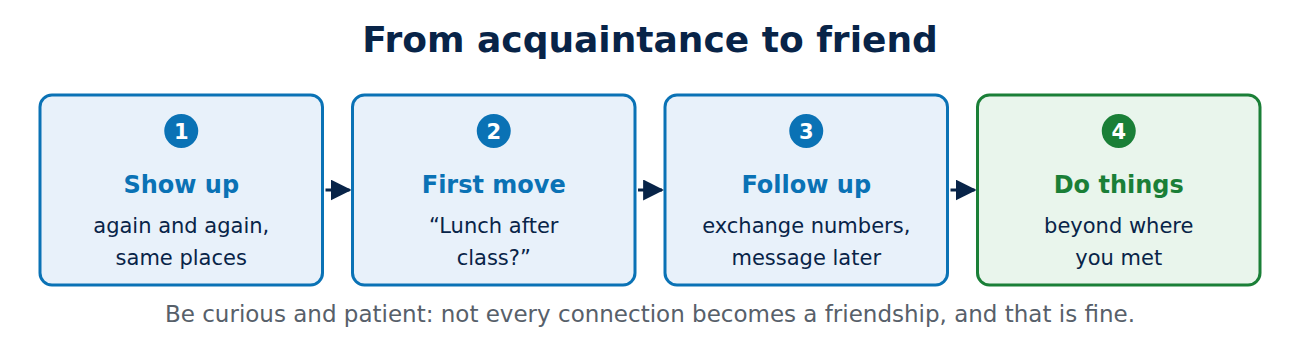
- Show up repeatedly: the same club, the same class, the same weekly event. Familiarity builds trust.
- Make the first move: “Do you want to grab lunch after class?” Most people are relieved when someone else asks.
- Follow up: exchange numbers or social handles and send a message a few days later.
- Do things together beyond the setting where you met: a meal, a walk, a campus event.
- Be curious: ask questions, remember details, share a little about yourself too.
- Be patient: not every connection becomes a friendship, and that is fine.
Tips for introverts and shy students
- Choose structured activities with a shared task: games nights, volunteering, sports, clubs with a clear purpose.
- Prefer one-on-one or small-group meetups to big parties.
- Prepare a few simple openers: “How are you finding this class?”, “What made you pick this major?”
- Give yourself a small goal per week, such as one new conversation or one event.
Commuter and online students
- Stay on campus for an hour between classes, at the library, a lounge or a club meeting.
- Look for commuter student associations and lounges.
- In online programs, be active in discussion boards, join virtual study groups and meet local classmates if possible; see how to write a discussion post.
Keep old friends, but stay open
Staying in touch with high school friends and family is healthy, but spending every evening on video calls or going home every weekend can make it harder to build a new circle. Find a balance that leaves time for new people.
When loneliness lasts
Feeling lonely sometimes is normal. If it lasts for weeks, affects your sleep, mood or studies, or you feel hopeless, reach out to your campus counseling center. Many offer groups for exactly this. Resident advisors, academic advisors and student support offices can also connect you with communities. See also dealing with stress in college.
Frequently asked questions
Is it normal to have no friends in the first semester?
Yes. Many first-year students feel lonely at first. Friendships need repeated time together, so keep showing up to the same activities.
How can I make friends if I live off campus?
Spend time on campus between classes, join a club or commuter association, form study groups and take part in events at times that suit your schedule.
What if I am an introvert?
Choose structured, small-group activities with a shared task, set small weekly goals and prefer one-on-one meetups to big parties.
Conclusion
Making friends in college takes time and repeated contact, and almost everyone struggles at first. Meet people in classes, your residence hall, clubs, sports and campus jobs, show up regularly, make the first move and follow up. Choose structured activities if you are shy, stay on campus between classes if you commute, and reach out for support if loneliness lasts. The effort in the first semester pays off for years.
Sources and further reading
- How many hours does it take to make a friend? (Hall, 2019, Journal of Social and Personal Relationships)
- About Social Connectedness (Centers for Disease Control and Prevention)



















Recent Comments