
College life seems designed to destroy sleep: early lectures, late study sessions, roommates, parties, part-time jobs and a phone that never goes quiet. Many students treat sleep as the first thing to cut when time is short. That is a costly mistake: sleep is when the brain stores what you learned, and too little of it hurts concentration, memory, mood and grades.
This guide explains how much sleep students need, why it matters for learning, and gives practical tips for better sleep, even in a noisy dorm and during exam season.
How much sleep do students need?
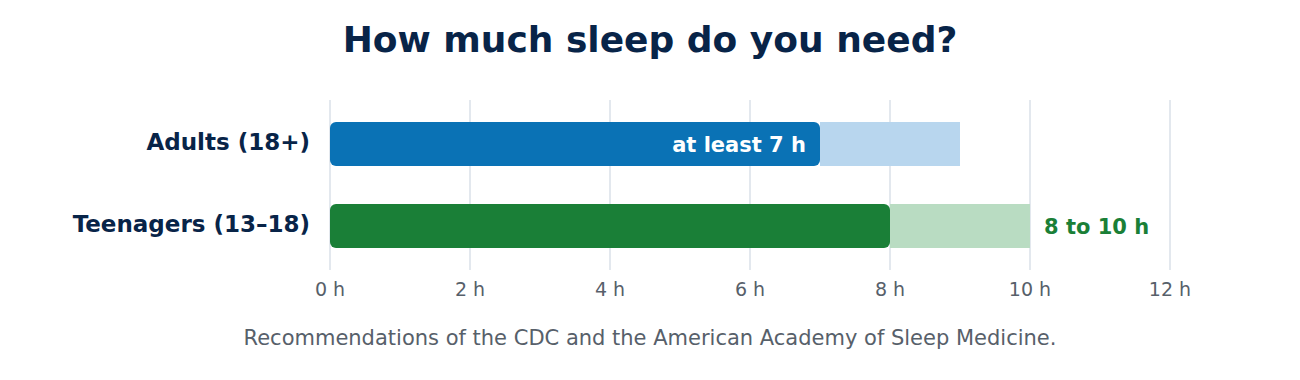
- Adults (18 and older): at least 7 hours per night, according to the CDC and the American Academy of Sleep Medicine.
- Teenagers (13–18): 8 to 10 hours.
Surveys regularly find that many college students get less than that, and that irregular sleep, such as very late nights during the week and long lie-ins at weekends, is common.
Why sleep matters for learning
- Memory: during sleep, the brain consolidates new information and moves it into long-term memory. Studying and then sleeping helps you remember more than studying through the night.
- Attention and problem-solving: after a short night, focus, reaction time and complex thinking all decline, which matters in exams.
- Mood and stress: lack of sleep makes stress, anxiety and low mood worse; see dealing with stress in college.
- Health: regular short sleep weakens the immune system and is linked to weight gain and other health problems.
Keep a regular schedule
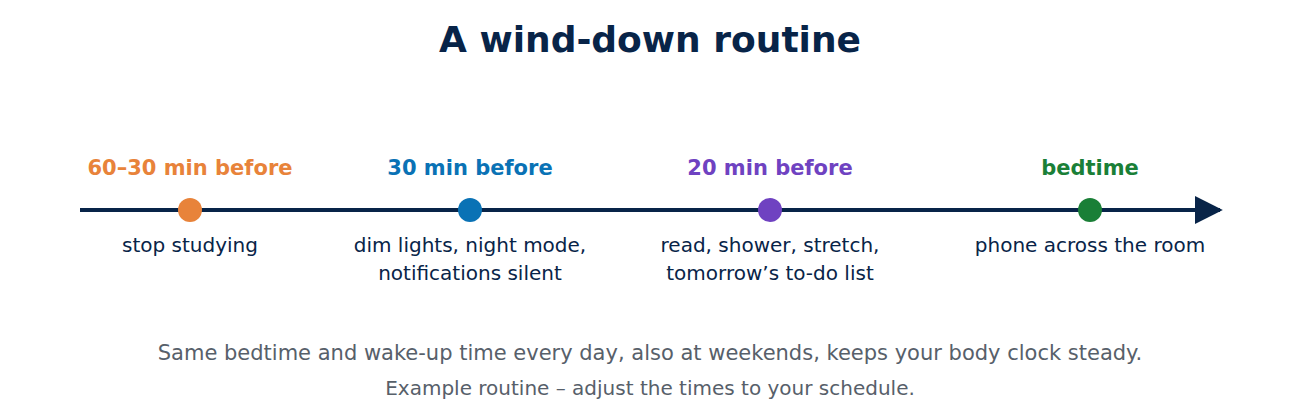
The single most effective habit is going to bed and getting up at roughly the same time every day, including weekends. Your internal clock adapts, you fall asleep faster and wake up more easily. If you must shift, do it gradually, by 15–30 minutes a day.
Build a wind-down routine
- Stop studying 30–60 minutes before bed.
- Dim the lights and reduce screen use; at least turn on night mode and silence notifications.
- Do something calming: reading, a shower, light stretching, journaling or writing tomorrow’s to-do list to clear your head.
- Keep the phone away from the bed, ideally across the room, with a real alarm clock if needed.
Watch caffeine, alcohol and food
- Caffeine stays in the body for many hours. Avoid coffee, energy drinks and strong tea in the afternoon and evening, about 6–8 hours before bed.
- Alcohol may make you sleepy but disrupts deep and REM sleep later in the night.
- Heavy meals late at night can make it harder to fall asleep; a light snack is fine.
- Nicotine is a stimulant and also disturbs sleep.
Make your room sleep-friendly
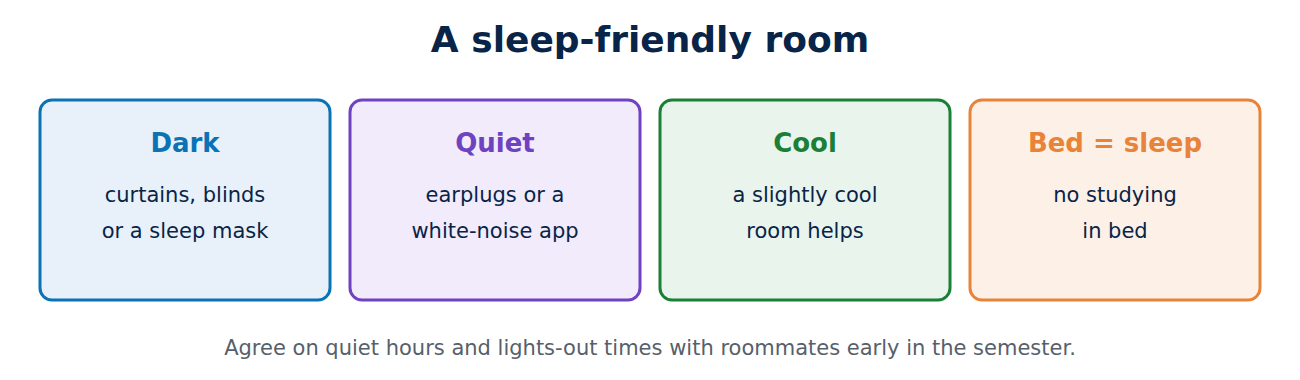
- Dark: curtains, blinds or a sleep mask.
- Quiet: earplugs or a white-noise app in a noisy dorm.
- Cool: a slightly cool room helps you fall asleep.
- Bed for sleep: studying in bed teaches your brain to associate the bed with being awake.
- Roommates: agree on quiet hours and lights-out times early in the semester.
Naps and all-nighters
- Short naps of 20–30 minutes in the early afternoon can boost alertness without ruining night sleep. Avoid long or late naps.
- All-nighters before exams usually backfire: you lose the memory consolidation from sleep and perform worse. Plan your revision instead; see how to make a revision timetable.
Move and get daylight
Regular physical activity and morning daylight help regulate your internal clock and improve sleep quality. A walk to an early class or a short outdoor break in the morning makes a difference. Avoid intense workouts right before bed if they keep you awake.
When to get help
If you regularly cannot fall asleep or stay asleep despite good habits, snore loudly with breathing pauses, feel exhausted after a full night or rely on sleeping pills or alcohol, talk to your campus health center. Sleep problems are often linked to stress, anxiety or depression, and counseling services can help too.
Conclusion
Students need at least 7 hours of sleep, and teens 8 to 10, to learn, concentrate and stay healthy. Keep a regular schedule, wind down without screens, cut caffeine in the afternoon, make your room dark, quiet and cool, and replace all-nighters with planned revision and short naps. Combined with good study habits such as effective study techniques, sleep is one of the easiest ways to improve your grades.
Sources and further reading
- About Sleep (Centers for Disease Control and Prevention)
- Healthy Sleep (American Academy of Sleep Medicine)



















Recent Comments