
The classroom, as we traditionally know it—rows of desks, chalkboards, and a single authoritative voice—is rapidly becoming a relic of the past. We stand at the precipice of an educational revolution, one driven not by curriculum updates, but by exponential technological leaps. Artificial intelligence (AI), sophisticated digital platforms, and immersive smart solutions are fundamentally changing the definition of "learning." Education is moving away from a standardized, one-size-fits-all model toward a deeply personalized, adaptive, and universally accessible experience.
This transformation is not merely about digitizing textbooks; it is about fundamentally changing the relationship between the student, the content, and the educator. The goal is to create a perpetual learning environment—a space where curiosity is the primary engine, and technology serves as the ultimate guide, mentor, and resource. Understanding these shifts is crucial, as they promise to unlock human potential on a scale previously unimaginable, democratizing knowledge and making high-quality education available to virtually everyone, regardless of geography or socioeconomic status.
The Era of Hyper-Personalization: Learning Tailored to the Individual
Perhaps the most profound shift AI brings to education is the ability to move beyond the standardized curriculum. For centuries, students were taught at the pace of the average, leaving gifted students bored and struggling students overwhelmed. AI dismantles this limitation.
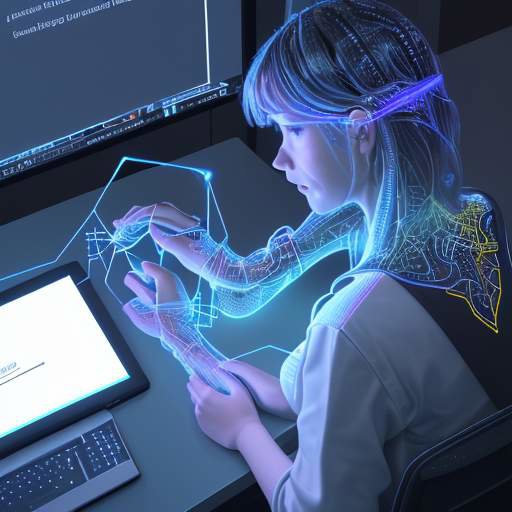
Adaptive learning platforms are the core technology enabling this hyper-personalization. These systems continuously assess a student’s strengths, weaknesses, preferred learning styles (visual, auditory, kinesthetic), and even their emotional state. If a student struggles with algebraic concepts, the AI doesn’t just provide more practice problems; it diagnoses the root cause—perhaps a misunderstanding of basic fractions—and generates supplementary, targeted modules until mastery is achieved.
This process is far more nuanced than simple grading. AI tutors can act as tireless mentors, providing instant, non-judgmental feedback 24/7. They can adjust the complexity of the material in real-time, offering scaffolding when needed and accelerating the pace when the student demonstrates readiness. For example, if a student shows a natural aptitude for pattern recognition, the platform might subtly introduce modules from advanced coding or musical theory, pivoting the learning path before the student even realizes their deep interest.
This shift empowers the student to become the architect of their own knowledge journey. Learning becomes less about absorbing information and more about mastering skills, making the educational process deeply engaging and inherently motivating.
AI as the Ultimate Teaching Assistant: Empowering Educators
A common fear surrounding AI in education is the replacement of human teachers. This fear fundamentally misunderstands the role technology is designed to play. Far from replacing educators, AI is poised to be the ultimate co-pilot, taking over the most time-consuming, repetitive, and data-heavy tasks, thereby allowing human teachers to focus on what they do best: inspiring, mentoring, and nurturing emotional intelligence.
Consider the administrative burden on modern teachers: grading hundreds of papers, tracking individual student progress across multiple subjects, and identifying patterns of academic struggle across an entire class. This process is exhaustive and often leads to burnout. AI solutions automate these tasks with remarkable efficiency.
AI grading tools, for instance, can assess not just multiple-choice answers, but the structural integrity, argumentation quality, and even the tone of written essays, providing instant, detailed feedback to both the student and the teacher. Furthermore, AI can analyze class performance data to flag "at-risk" students or entire subject areas that require pedagogical adjustment. Instead of spending evenings compiling reports, the teacher receives a concise, actionable dashboard: "Group A needs help with critical thinking; Student B is showing signs of disengagement."
This liberation from administrative drudgery redefines the teacher’s role. They transition from being mere content deliverers to becoming expert facilitators, emotional guides, and curriculum designers. Their focus shifts from teaching information to cultivating wisdom and critical thinking—skills that only human interaction can truly foster.
Global Accessibility and Equity: Breaking Down Walls
One of the most profound societal impacts of AI in education is its potential to drastically improve global equity. Historically, access to world-class education has been dictated by geography, wealth, and infrastructure. Smart digital solutions are dismantling these barriers.
For students in remote rural areas, or those living in developing nations with limited access to specialized teachers, AI-powered platforms deliver world-class instruction. These platforms are designed to be highly bandwidth-efficient, allowing quality content to reach areas previously considered "off the grid."
Moreover, AI is a powerful equalizer for students with disabilities. Text-to-speech, speech-to-text, real-time translation, and adaptive interfaces mean that the learning environment can mold itself to the student, rather than forcing the student to mold themselves to the environment. A student who is deaf can interact seamlessly with lectures via real-time captioning and visual aids; a student who speaks a minority language can receive instruction in a personalized, multilingual format.
This democratization of knowledge means that talent, rather than zip code, will determine educational opportunity. It promises a future where a brilliant mind in a developing nation has the same access to advanced physics lectures and coding tutorials as a student in Silicon Valley.
Immersive Learning: The Power of Virtual and Augmented Reality
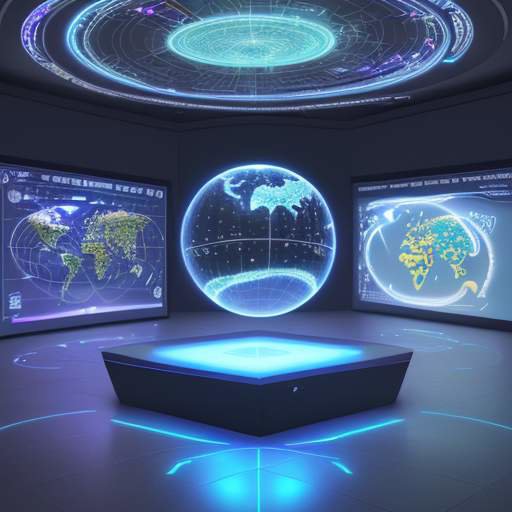
While AI handles the intelligence of the learning process, Virtual Reality (VR) and Augmented Reality (AR) are revolutionizing the experience of learning. These technologies move education from the abstract realm of textbooks into the tangible, visceral world of simulation.
Imagine a history class that doesn’t just read about Ancient Rome, but is transported there via a VR headset. Students can walk through the Forum, observe a gladiatorial match, and interact with historically accurate digital replicas of citizens. This immersion transforms passive reception into active participation.
In the sciences, VR allows medical students to practice complex, high-stakes surgeries on realistic digital mannequins without risk. Engineering students can build and test bridges or spacecraft in a virtual wind tunnel, allowing them to fail safely and iterate until success is achieved.
AR takes this a step further, blending the digital with the physical. A student studying biology might point a tablet at a plant, and the AR overlay instantly projects a 3D model of its internal vascular system, labeling the parts and explaining their function in real time. This blend of reality and data creates a depth of understanding that traditional methods simply cannot match. Learning becomes experiential, making complex, abstract concepts immediately intuitive and memorable.
The New Curriculum: Focus on Skills, Not Just Facts
The rapid pace of technological change means that the shelf life of factual knowledge is shrinking. What was considered essential knowledge ten years ago may be obsolete today. Consequently, the educational focus is shifting dramatically—away from rote memorization and toward the cultivation of meta-skills.
The future curriculum must prioritize:
- Critical Thinking and Problem Solving: The ability to analyze complex, novel problems and devise original solutions.
- Emotional Intelligence (EQ): Understanding self, managing emotions, and collaborating effectively with diverse groups.
- Digital Literacy and Prompt Engineering: Not just knowing how to use technology, but knowing how to ask the right questions of AI and digital tools to generate optimal results.
- Adaptability and Lifelong Learning: The understanding that education is not a destination, but a continuous, iterative process that must accompany one’s career throughout life.
AI and smart tech are the tools that enable this shift. They handle the factual recall, freeing up time and cognitive energy for students to engage in the higher-order thinking skills that truly define human intelligence.
Conclusion: The Human Element Remains Central
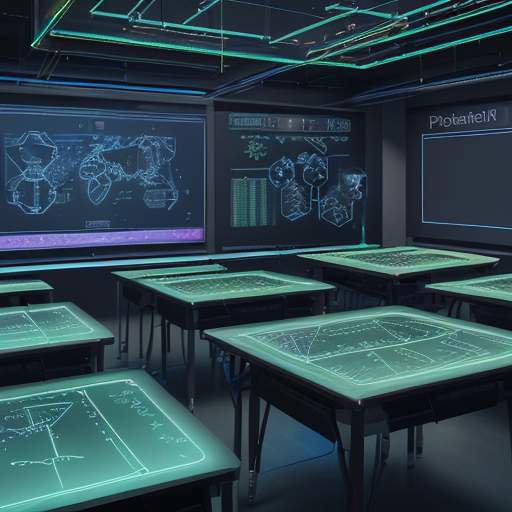
The integration of AI and smart digital solutions into education is not a technological fad; it is a necessary evolution. These tools promise to solve humanity’s oldest educational challenge: how to effectively teach every individual, at their unique pace, across every corner of the globe.
However, as revolutionary as the technology is, it is crucial to remember what remains irreplaceable: the human element. AI can provide data, VR can provide experience, and adaptive platforms can provide personalized pacing. But it cannot provide the spark of inspiration, the empathy of a mentor, or the moral guidance of a dedicated teacher.
The future of learning is a powerful synergy. It is the marriage of cutting-edge technology—the boundless capacity of AI—with the timeless wisdom and emotional connection of the human educator. By embracing these smart digital solutions, we are not just upgrading classrooms; we are upgrading humanity itself, preparing a generation that is not just knowledgeable, but truly capable, adaptable, and ready to solve the challenges of tomorrow. The learning journey, once confined by physical walls and standardized tests, is now limitless.



















Recent Comments