
Rent, books, food and a social life add up quickly, and most students need some income during their studies. The good news is that there are more flexible options than ever, from campus jobs to tutoring and freelance work online. The catch: your studies come first, international students have strict work limits, and student job ads attract a lot of scams.
This guide covers realistic ways to make money as a student, what each option pays off in experience, the rules for international students, and how to avoid the most common scams.
How much should you work?
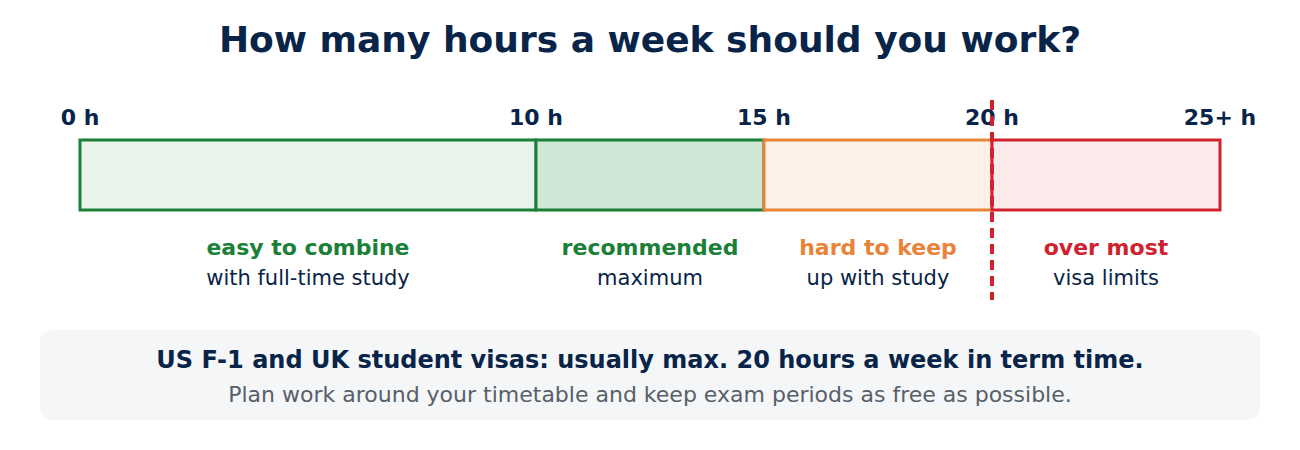
Many universities recommend keeping paid work to around 10 to 15 hours a week during the semester for full-time students. More than that makes it hard to keep up with lectures, reading and exam preparation. Plan your work hours around your timetable, not the other way round, and keep exam periods as free as possible.
Jobs on campus
- Library, cafeteria, gym or front desk: shifts are scheduled around classes, and employers understand exam periods.
- Research or teaching assistant: ask professors in your department. The pay may be modest, but the experience and references are valuable for graduate school and jobs.
- Student ambassador or campus tour guide: paid by the hour for open days and events.
- Federal Work-Study (US): if your financial aid package includes it, you can earn money through part-time jobs on or near campus.
Tutoring and teaching
If you are good at a subject, tutoring is one of the best-paid student jobs, and it reinforces your own knowledge. Options include tutoring school students in your area, working for your university’s tutoring center, teaching a language you speak natively, or giving music or sports lessons. Online tutoring platforms let you work from home, but they take a commission and competition is strong, so start with personal recommendations.
Freelancing and online work
Skills you learn at university can earn money online:
- Writing and editing: blog posts, product descriptions, proofreading (never other students’ graded assignments).
- Design, video and social media for local businesses, clubs and start-ups.
- Programming and web development: small websites, scripts and data analysis.
- Translation if you speak two languages fluently.
Start with people you know (local shops, associations, family businesses) before competing on large freelance platforms. A small portfolio of real work is worth more than a polished profile. For an overview of platforms, see our guide to freelance portals. Freelance income is usually self-employed income: check whether you need to register it and pay tax in your country.
Flexible side jobs
- Retail, hospitality and events: evening and weekend shifts, often with flexible scheduling.
- Babysitting, pet sitting and house sitting: well paid by word of mouth.
- Paid studies: university psychology and medical departments often pay participants for studies and surveys.
- Selling things: textbooks, clothes and electronics you no longer need, on second-hand platforms.
Internships and jobs in your field
A paid internship or a working-student job in your field pays twice: money now and a better start after graduation. Ask your career service about part-time positions with local companies, and prepare a short CV; our article on the difference between a CV and a resume explains which one to use.
Rules for international students
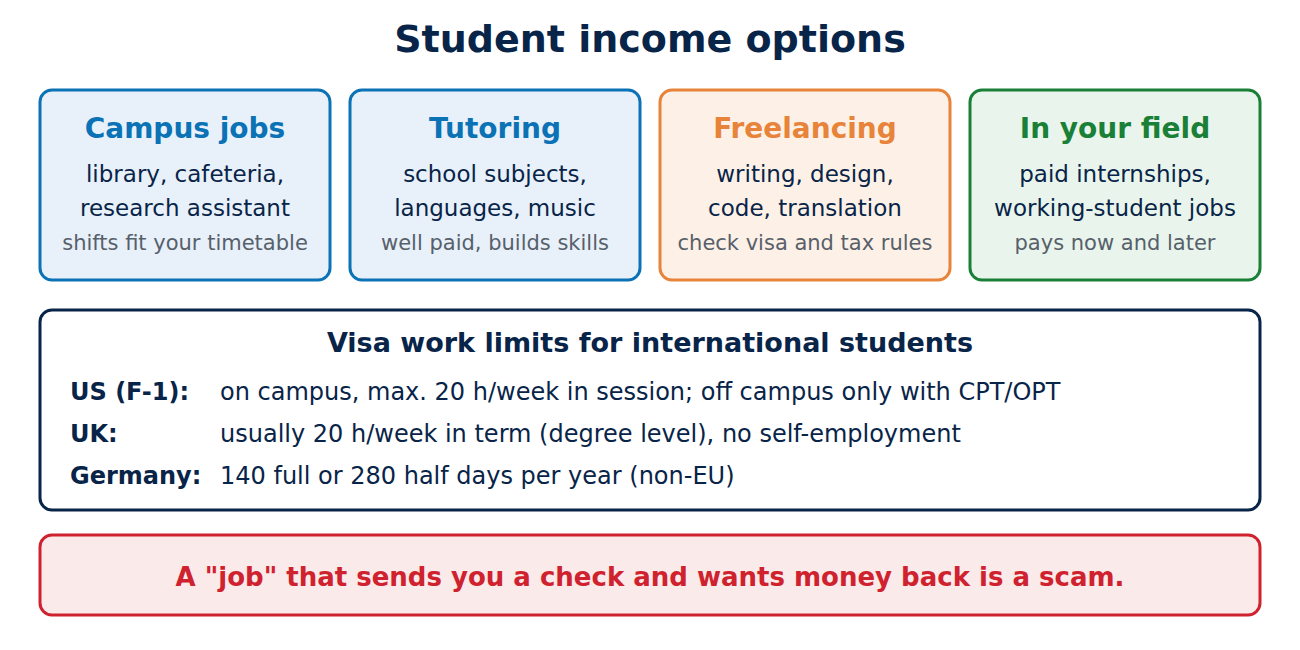
If you study on a student visa, the work limits are part of your visa conditions. Breaking them can cost you your visa. Typical rules:
- United States (F-1 visa): on-campus work only, up to 20 hours a week while school is in session. Off-campus work needs separate authorization, for example Curricular Practical Training (CPT) or Optional Practical Training (OPT).
- United Kingdom (Student visa): your visa states your limit, usually 20 hours a week in term time for degree-level study, with full-time work allowed in official vacations. Self-employment and freelancing are not allowed.
- Germany: non-EU students may work 140 full days or 280 half days a year; see our guide to studying in Germany.
Always check the current rules with your university’s international office before you accept a job.
How to spot student job scams
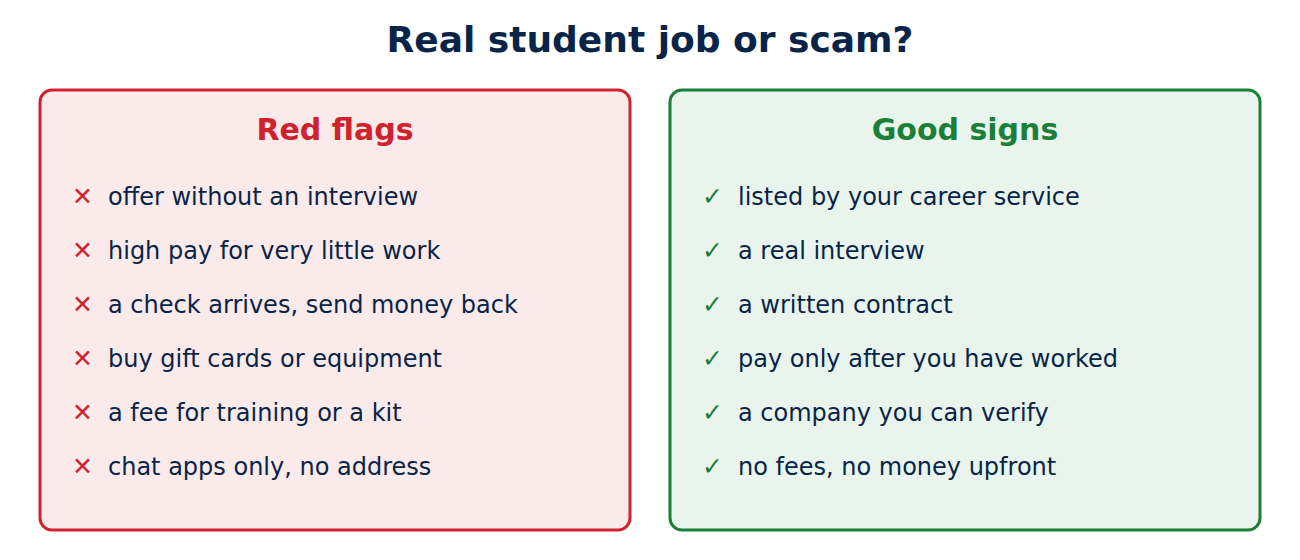
Scammers target students with fake jobs, often by e-mail that looks like it comes from a professor or a university office. Warning signs:
- You are offered a job without an interview, or for very little work at very high pay.
- You receive a check and are asked to send part of the money back or to buy gift cards or equipment. The US Federal Trade Commission warns that this is always a scam: the check bounces later and you lose the money.
- You have to pay a fee for training, a starter kit or “registration”.
- The employer only communicates by chat apps and avoids video calls or an office address.
Verify any offer through your university’s career service, and never share bank logins or ID documents before you have a signed contract.
Make your money go further
Earning more is only half of it. A simple monthly budget, student discounts and a few habits can save as much as a part-time job pays; see saving money in college: the dos and don’ts.
Conclusion
The best student jobs fit around your timetable and build skills for later: campus jobs, research assistant roles, tutoring and work in your field. Freelancing works well if you have a marketable skill, as long as your visa and tax rules allow it. Keep your hours reasonable during the semester, follow the work limits of your visa, and treat any job that sends you money before you start as a scam.
Sources and further reading
- Federal Work-Study Jobs (Federal Student Aid, US Department of Education)
- Working in the United States as an F-1 student (Study in the States, DHS)
- Student visa: what you can and cannot do (GOV.UK)
- Working while studying in Germany (Make it in Germany)


















Recent Comments