
The modern educational landscape is shifting beneath our feet. For students navigating complex curricula, the sheer volume of information can often feel overwhelming, leading to burnout and fragmented focus. However, a technological revolution is providing a lifeline: using AI study planners to boost academic productivity is no longer a futuristic concept; it is a practical strategy for students who want to reclaim their time and master their coursework. By integrating an intelligent ai tool into your daily routine, you can move beyond simple "to-do" lists and toward a dynamic, adaptive system that understands your specific learning pace and priorities.
Whether you are pursuing a degree locally or engaging in online study in uk programs, the ability to organize complex tasks is paramount to achieving consistent results.
The Evolution of Study Management: From Paper to AI
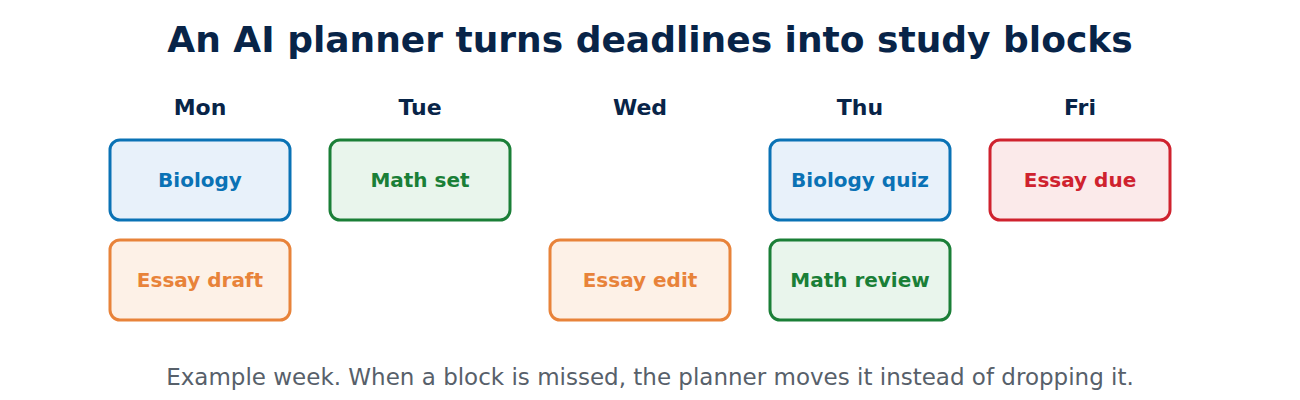
For decades, students relied on paper planners or basic digital calendars. While these tools are excellent for recording dates, they lack the ability to adapt. If a student falls behind on a chapter of biology, a traditional planner doesn’t "know" that the remaining tasks need to be redistributed over the remaining weeks.
This is where AI-driven planning changes the game. An AI study planner doesn’t just hold your data; it analyzes it. It can identify patterns in your productivity, suggest optimal times for deep work based on your habits, and automatically recalibrate your schedule when life gets in the way. By mastering these essential digital skills, students can transition from reactive studying—scrambling to finish assignments at the last minute—to proactive learning, where every hour spent is strategically aligned with their ultimate goals for academic success.
How AI Study Planners Enhance Focus and Time Management
One of the greatest hurdles in higher education is "decision fatigue." When a student sits down to study but doesn’t know exactly what to work on first, they often waste precious time scrolling through notes or switching between tasks. An AI-powered system eliminates this friction by providing a clear, prioritized roadmap for the day.
These tools can break down massive projects—like a 5,000-word thesis—into micro-tasks. Instead of seeing "Write Thesis" as one daunting task, the AI breaks it down into: "Research primary sources," "Outline Chapter 1," and "Draft introductory paragraph." This granular approach keeps motivation high and prevents the paralysis that comes from looking at a mountain of work.
Furthermore, these systems can integrate with your calendar to find "pockets" of time. If you have a 30-minute gap between lectures, the AI can suggest a quick review of flashcards or a vocabulary quiz, ensuring that every moment is utilized effectively. This level of optimization is a cornerstone of modern ai lifeskills, allowing students to balance their academic demands with personal well-being.
Integrating an AI Tutor into Your Workflow
While a planner manages your time, an ai tutor helps manage your understanding. When integrated with a study planner, these two tools create a powerhouse of productivity. If the planner identifies that you are struggling with a specific concept in organic chemistry, it can flag this for the AI tutor to provide extra practice problems or simplified explanations.
The synergy between planning and tutoring means you aren’t just "doing the work"; you are mastering the content. This is vital for students who need personalized attention but may not have access to constant 1-on-1 human tutoring. By leveraging an ai tool as a primary educational companion, students can receive instant feedback on their logic and clarify complex theories in real-time, significantly accelerating the learning curve.
Navigating Academic Integrity in the Age of AI
As we embrace these technologies, it is crucial to discuss the ethics of their implementation. Many students worry about how to use these tools without crossing the line into academic dishonesty. The key lies in using AI as a "co-pilot" rather than an "auto-pilot."
An AI study planner is a tool for organization and methodology—it tells you when and how to study, not what to write for you. To maintain academic integrity, students must ensure that the final output of their work remains their own. It is always wise to consult university guidelines regarding the use of generative tools. For more information on staying within ethical boundaries, you can read these specific guidelines to ensure your academic journey remains untarnished.
Furthermore, students should be aware that many institutions now use an ai detector to check for non-human content. By using AI primarily for planning, outlining, and clarifying concepts—rather than generating final essays—students can enjoy the benefits of high-tech productivity while upholding the highest standards of original work.
Overcoming Procrastination with Dynamic Scheduling
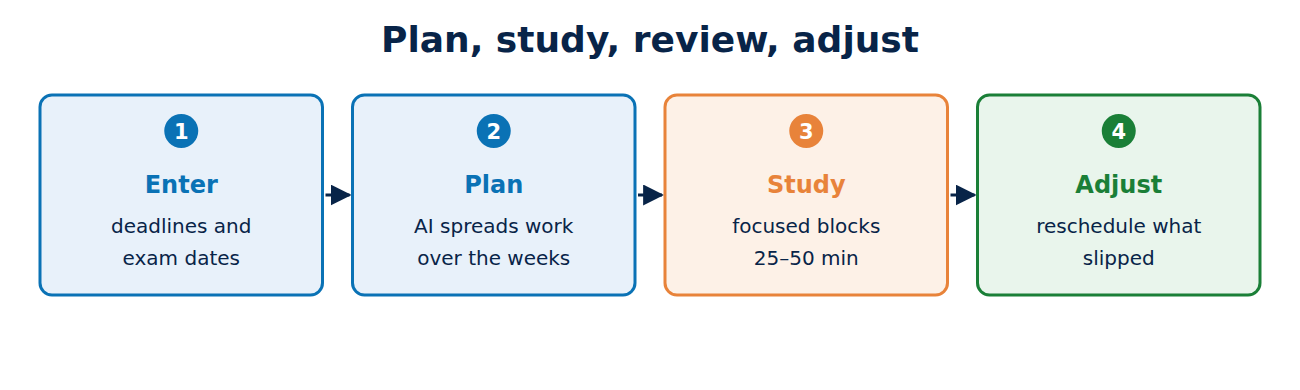
Procrastination is often a symptom of feeling overwhelmed. When a task feels too big or vague, the brain’s natural response is to avoid it. AI study planners combat this by utilizing "dynamic scheduling."
If you miss a study session on Tuesday, a human-made paper planner stays the same; the tasks just pile up until Wednesday, making the workload feel even heavier. An AI system, however, will automatically recalculate your remaining tasks for the week. It adjusts the deadlines, re-prioritizes the "must-haves" versus the "nice-to-haves," and creates a new, achievable path forward. This constant recalibration prevents the "snowball effect" of falling behind, which is one of the primary causes of student stress.
Additionally, many AI platforms incorporate "gamification" or "streak" mechanics. By visualizing progress through visual cues and achievement markers, these tools tap into the brain’s reward system, making the grind of studying feel more like a series of small wins. This psychological boost is essential for maintaining long-term motivation during grueling exam seasons.
Mastering the Art of Research and Note-Taking
Beyond just planning your time, AI can revolutionize how you interact with information. A major part of academic success involves synthesizing complex texts into coherent notes. Many students find the initial stages of research daunting because they don’t know how to organize their findings.
By using an ai tool to assist in the early stages of research, students can quickly summarize long articles, identify key themes, and organize citations. For those looking to streamline their workflow, you can explore these research tips to see how AI can act as a powerful assistant in the laboratory of the mind. When your notes are organized by an intelligent system, your study sessions become much more efficient because you spend less time "finding" information and more time "processing" it.
This doesn’t mean letting the AI do the thinking for you. Rather, it means using the technology to clear away the administrative hurdles of research so that your human intellect can focus on high-level analysis and critical thinking.
Conclusion: Embracing the Future of Learning
The integration of AI into the educational sphere is not just a trend; it is a fundamental shift in how we approach knowledge acquisition. By using AI study planners well, students can move away from the "hustle culture" of frantic late-night cramming and toward a more balanced, intentional way of learning.
These tools provide the structure that many students need to stay organized, the adaptability required to handle the unpredictability of life, and the clarity needed to focus on what truly matters: deep understanding. When used ethically and with a clear purpose, AI becomes a powerful ally in the quest for knowledge. By mastering these new ai lifeskills, today’s students are not just preparing for their next exam—they are preparing for a future where they can navigate a complex, tech-driven world with confidence and competence.
The journey of education is demanding, but it doesn’t have to be lonely or disorganized. With the right tools in your arsenal, you can transform your study habits from a source of stress into a streamlined path toward excellence. Embrace the technology, stay true to your academic integrity, and unlock your full potential in the modern age of education.

















Recent Comments