
The educational landscape, once confined to physical classrooms and chalkboards, has undergone a seismic transformation. Accelerated by global events, online tutoring and e-learning have transitioned from being mere substitutes for traditional schooling to becoming a powerful, indispensable global industry. We are no longer talking about simply delivering content digitally; we are discussing a revolution in pedagogy, accessibility, and personalized mastery. The global e-learning market is not just growing—it is evolving into a sophisticated ecosystem that promises to democratize knowledge like never before.
For students, parents, and institutions, understanding this shift is paramount. The future of online tutoring is not a single technology but a complex convergence of Artificial Intelligence, immersive reality, and human mentorship. It is a future where learning is hyper-personalized, borderless, and deeply adaptive. This comprehensive guide will navigate the key trends, technological pillars, and ethical considerations shaping the next generation of global e-learning.
The Rise of AI-Powered Personalization and Adaptive Learning
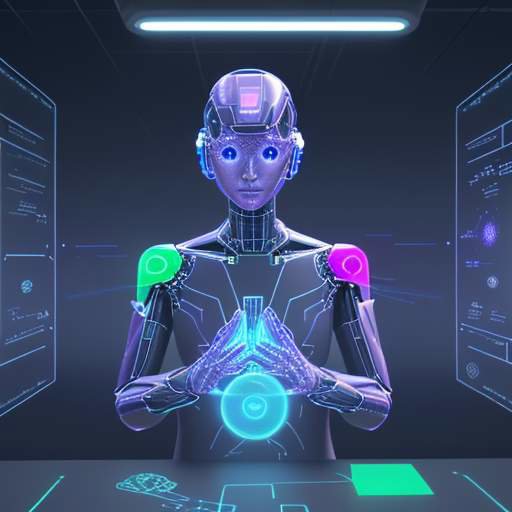
The most significant technological leap in online tutoring is the integration of Artificial Intelligence. Gone are the days of one-size-fits-all educational modules. Modern e-learning platforms are powered by sophisticated AI algorithms that function as tireless, omniscient tutors. These systems analyze student performance in real-time—not just identifying incorrect answers, but understanding why the student struggled.
Adaptive learning platforms use predictive analytics to adjust the curriculum on the fly. If a student demonstrates a weakness in foundational algebra, the AI doesn’t wait for the next unit; it immediately serves targeted micro-lessons, remedial quizzes, and alternative explanations until mastery is achieved. This level of granular, continuous assessment is impossible for a single human tutor to maintain across dozens of students simultaneously.
AI tutors are also beginning to handle administrative and motivational aspects of learning. They can provide instant feedback, manage study schedules, and even generate personalized "growth mindset" prompts, acting as a constant academic coach. This technological shift moves the focus from content delivery (which AI handles efficiently) to high-level critical thinking and human emotional support (which remains the domain of the mentor).
The integration of AI is transforming tutoring from a reactive service (fixing mistakes) into a proactive system (preventing gaps in understanding). It promises to unlock human potential by ensuring that every learner receives instruction precisely tailored to their unique cognitive pace and style.
Breaking Borders: Global Accessibility and Educational Equity
Historically, the quality of education was dictated by geography and economic status. A child in a remote village had limited access to the same resources as a child in an affluent metropolitan center. Online tutoring fundamentally challenges this premise, acting as a powerful engine for educational equity.
The internet, while imperfect, has become the great equalizer. A student in Nairobi can access specialized instruction in advanced particle physics from a professor in Cambridge, all through a virtual platform. This global reach means that niche, high-quality education—previously reserved for elite institutions—is now available on demand.
Furthermore, e-learning platforms are becoming increasingly optimized for low-bandwidth environments. This focus on accessibility is crucial for reaching underserved populations in developing nations. Instead of requiring constant, high-speed internet, platforms are adopting modular, offline-first design principles, allowing students to download content and work through lessons even when connectivity is intermittent.
This democratization of knowledge is perhaps the most profound social impact of the e-learning market. It allows entire communities to upskill, reskill, and pivot their economies without the need for massive, physical infrastructure investments. The global marketplace of knowledge is expanding, making education a utility available to anyone with a device and a connection.

Immersive Learning: The Power of VR and AR
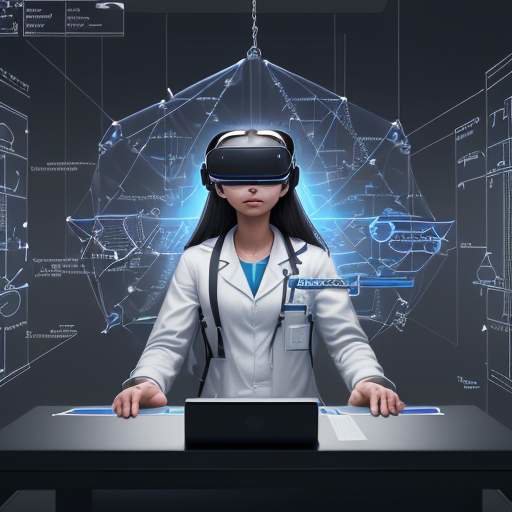
While AI handles the "what" and "when" of learning, immersive technologies—Virtual Reality (VR) and Augmented Reality (AR)—are redefining the "how." These tools transform passive consumption of information into active, embodied experience.
Imagine a history class where students don’t just read about Ancient Rome; they put on a headset and walk through the Forum, interacting with holographic citizens and observing daily life. Consider a medical student who can practice complex surgery on a virtual patient model, repeating the procedure until perfect mastery is achieved, all without risk.
VR and AR move learning from the two-dimensional screen into a three-dimensional, experiential space. This shift is critical for vocational and STEM fields. For engineering students, AR overlays can project complex schematics onto a physical engine block, allowing them to visualize internal workings. For chemistry, VR can simulate dangerous reactions in a safe, controlled environment.
The effectiveness of immersive learning stems from its ability to trigger spatial memory and kinesthetic learning—types of memory retention that traditional methods often struggle to activate. These technologies promise to make learning not just engaging, but profoundly memorable.
The Enduring Value of the Human Mentor: Blended Learning Models
Despite the incredible advancements in AI and VR, the core pillar of effective tutoring remains the human element. This is a crucial point of understanding: technology should augment, not replace, the human tutor.
The future of tutoring is defined by the Blended Learning Model. This model strategically combines the scalability and precision of AI with the empathy, intuition, and motivational power of a human mentor.
The AI handles the data crunching, the repetitive drills, and the immediate feedback loops. The human tutor, in turn, steps into the role of a curator, a coach, and a sounding board. They are responsible for teaching meta-skills: critical thinking, ethical reasoning, complex problem-solving, and emotional intelligence.
A human tutor can recognize the signs of burnout, frustration, or intellectual curiosity—subtleties that algorithms, while advanced, cannot yet fully grasp. They can inspire, challenge assumptions, and provide the necessary emotional scaffolding that turns mere information acquisition into true wisdom. The human mentor guides the student through the "why," while the AI helps with the "how."

Navigating the Challenges: Ethics and the Digital Divide
The rapid expansion of e-learning is not without its hurdles. For the global market to truly realize its potential, we must address critical ethical and logistical challenges.
Foremost among these is the Digital Divide. While e-learning promises equity, it risks exacerbating existing inequalities if access to reliable hardware, high-speed internet, and digital literacy training is not universal. The "digital divide" is not merely about having a phone; it is about having the right tools and the support to use them effectively. Policy makers and educational institutions must prioritize infrastructure development alongside content creation.
Secondly, there is the issue of Data Privacy and Bias. Since AI systems rely on massive amounts of student data, safeguarding that data is paramount. Furthermore, if the data used to train AI models is biased (e.g., predominantly reflecting Western, male, or affluent perspectives), the resulting educational tools may perpetuate and even amplify those biases, limiting the learning opportunities for marginalized groups.
Finally, the challenge of Accreditation and Quality Control is immense. As global tutoring platforms proliferate, ensuring that the credentials, curricula, and quality of instruction are maintained across different jurisdictions requires international standardization and robust oversight. Trust must be built into the system as carefully as the technology itself.

Conclusion: A Collaborative Future
The future of online tutoring is undeniably bright, dynamic, and complex. It is a future where the sheer power of AI personalizes the curriculum, where VR makes the abstract tangible, and where global connectivity levels the playing field of opportunity.
However, this revolution demands a collaborative effort. Success hinges on three pillars: technological innovation (AI, VR), ethical governance (data privacy, bias mitigation), and human commitment (the irreplaceable role of the mentor).
As the global e-learning market matures, the goal will shift from merely delivering content to cultivating comprehensive, adaptable, and ethically informed global citizens. The online tutor of tomorrow will not just be a source of knowledge, but a gateway to limitless potential, connecting every mind, regardless of its zip code, to the vast, boundless ocean of human understanding. The learning journey has become truly global, and the world is ready to adapt.



















Recent Comments