
The classroom of the 21st century is undergoing a revolution—one driven not by new textbooks or redesigned desks, but by artificial intelligence. For centuries, education has operated on a relatively standardized model: a single curriculum delivered to a group of students at a set pace. While this model served its purpose, it often struggled to meet the profound diversity of human potential. Today, AI is not merely a tool; it is a structural catalyst, promising to dismantle the one-size-fits-all approach and usher in an era of hyper-personalized, adaptive, and deeply effective learning.
The integration of AI into education is not just about automating grading or scheduling; it is about fundamentally redefining what it means to be taught, what skills are valuable, and how we measure success. From personalized tutoring that adapts in real-time to complex simulations that allow students to fail safely, AI is empowering a global educational renaissance. But what does this future look like, and how must students, educators, and institutions prepare for the shift?
The Era of Hyper-Personalized Learning
Perhaps the most transformative promise of AI is its ability to deliver truly personalized education. Traditional classrooms, by necessity, must teach to the middle, leaving advanced students bored and struggling students falling behind. AI eliminates this compromise.
Adaptive learning platforms, powered by machine learning, act as tireless, infinitely patient tutors. They don’t just grade an answer; they analyze how the student arrived at that answer—identifying specific knowledge gaps, pinpointing conceptual misunderstandings, and determining the optimal learning modality (visual, auditory, or kinesthetic) for maximum retention. If a student struggles with fractions, the AI doesn’t just repeat the lesson; it might backtrack to review foundational concepts like multiplication, recognizing the root cause of the difficulty.
This level of granular analysis is impossible for a single human teacher to maintain for 30 different students simultaneously. AI provides the necessary data layer, transforming the teacher from a primary content dispenser into a high-level coach, mentor, and facilitator.
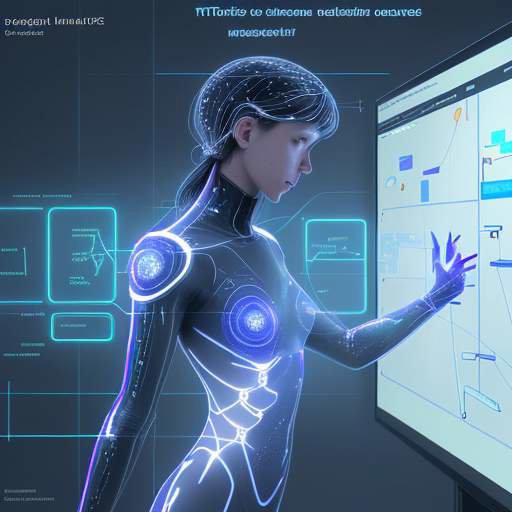
This shift means that learning is no longer a linear journey but a dynamic, branching exploration tailored to the individual’s cognitive rhythm and interests.
Bridging the Skills Gap: AI and the Future Workforce
The rapid advancement of AI itself is creating a massive skills gap. The jobs of the future will not be defined by rote memorization or repetitive tasks—those are the domains AI excels at. Instead, the value will shift dramatically toward uniquely human capabilities: critical thinking, emotional intelligence, complex communication, creativity, and ethical reasoning.
AI-powered educational systems are already adapting their curricula to prioritize these "soft" yet essential skills. They are moving beyond teaching facts and focusing on teaching how to think with those facts.
Consider the student learning history. Instead of merely memorizing dates and names, an AI-guided project might require the student to simulate a historical debate, forcing them to adopt multiple viewpoints, analyze conflicting primary sources, and articulate nuanced arguments—skills far more valuable in the modern workplace than simple recall.
Furthermore, AI tools are becoming invaluable in professional reskilling. An individual whose career was disrupted by automation can use AI platforms to identify the most marketable skills in a new industry, access micro-credentials, and practice those skills in simulated, real-world scenarios, making continuous, lifelong learning not just an option, but an economic necessity.
Accessibility and Equity: Democratizing Knowledge
One of the most profound social impacts of AI in education is its potential to drastically improve global accessibility and equity. High-quality education has historically been a privilege tied to geography and socioeconomic status. AI has the power to democratize that privilege.
For students in remote rural areas, or those with physical disabilities, AI-powered tools can provide immediate access to world-class instruction. Real-time translation, advanced speech-to-text and text-to-speech functionalities, and specialized interfaces can remove physical and linguistic barriers that have long limited educational opportunity.
AI tutors can provide consistent, high-quality support regardless of the local availability of expert human teachers. This level playing field is revolutionary. It means that a student in a village with limited resources can access the same level of conceptual tutoring as a student in a major metropolitan university. AI is leveling the academic playing field, promising a more equitable global knowledge base.
The Evolving Role of the Educator
The fear that AI will replace teachers is a common, yet inaccurate, concern. The reality is that AI will not replace the teacher; it will elevate them.
If AI handles the mechanical, time-consuming tasks—grading multiple-choice quizzes, tracking basic progress, and generating initial lesson plans—the human educator is freed to do what only humans can do: inspire, mentor, counsel, and foster emotional growth.
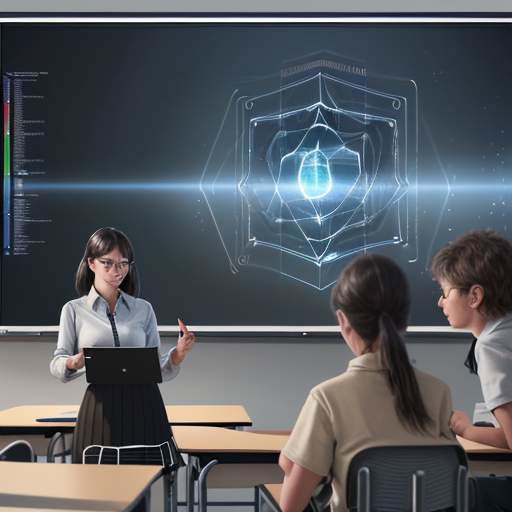
The modern teacher transitions from being a knowledge provider to a knowledge curator and motivator. Their value lies in their ability to spot the spark of genius, navigate the emotional turbulence of adolescence, and guide students through the ethical ambiguities of new technologies. They become the human connection point in a digital learning ecosystem.
This partnership is symbiotic. AI provides the data and the efficiency; the human teacher provides the wisdom, the empathy, and the moral compass.
Ethical Imperatives and Responsible Adoption
With such immense power comes immense responsibility. The integration of AI into education is not without its ethical quandaries. We must address issues of data privacy, algorithmic bias, and the digital divide.
Bias: If the data used to train AI models reflects historical biases (racial, gender, or socioeconomic), the AI will not only perpetuate those biases but could amplify them, potentially steering students toward predetermined, limited career paths. Institutions must demand transparency and audit AI algorithms rigorously.
Privacy: Educational data is intensely personal. Who owns the data generated by a student’s learning journey? How is it protected from misuse by corporations or governments? Robust, international regulations are needed to ensure that student data remains private and solely used for educational benefit.
The Digital Divide: The promise of universal access can quickly become a source of inequality if access to necessary hardware, reliable internet, and training remains uneven. Policymakers must treat high-speed internet and AI tools as essential educational utilities, ensuring that the renaissance benefits all communities, not just the privileged ones.

Conclusion: Preparing for the Lifelong Learner
The future of learning is not a destination; it is a continuous process of adaptation. AI is fundamentally shifting the educational paradigm from information acquisition to skill mastery and wisdom application.
For students, this means embracing curiosity, developing intellectual resilience, and viewing failure not as an endpoint, but as a data point for the next iteration of learning.
For educators, it means committing to continuous professional development, mastering the art of the human-AI partnership, and rediscovering the profound power of mentorship.
And for institutions, it means moving beyond mere technological adoption and adopting a holistic, ethical framework that prioritizes equity, critical thinking, and human potential.
The Generative AI Renaissance promises an educational landscape where every individual, regardless of background or location, has the tools and the opportunity to unlock their fullest potential. The challenge ahead is not technological—it is ethical, systemic, and profoundly human. By approaching this revolution with thoughtfulness, equity, and a commitment to human flourishing, we can ensure that AI truly serves as the greatest catalyst for human knowledge the world has ever seen.



















Recent Comments