The educational landscape has always been defined by its relationship with technology. From the printing press democratizing knowledge to the internet connecting classrooms globally, learning has consistently evolved alongside human ingenuity. Today, we stand at the precipice of the most profound shift since the digital age began: the integration of Artificial Intelligence into the very core of the student experience.
AI is not merely another tool; it is a cognitive partner, a tireless tutor, and a global research assistant rolled into one. It represents the "AI Edge"—a powerful capability that moves education from a one-size-fits-all lecture model to a hyper-personalized, adaptive journey.
For students, parents, and educators, the question is no longer if AI will change learning, but how we will master it. This comprehensive guide explores how modern AI tools are fundamentally revolutionizing academic success, transforming students from passive recipients of information into active, empowered knowledge architects.
The Dawn of Personalized Learning Paths: The AI Tutor
For decades, the ideal educational model was the one that could cater to every student’s unique pace, learning style, and area of weakness—a model that, until now, was largely theoretical. The reality of large classroom sizes often meant that instruction was delivered at a median pace, leaving gifted students bored and struggling students falling behind.
AI changes this equation entirely. Modern adaptive learning platforms use sophisticated machine learning algorithms to function as the ultimate personal tutor. These systems do not simply grade quizzes; they analyze how a student answers them. Did the student get the right answer by guessing, or did they grasp the underlying concept? Did they struggle with the vocabulary, or the mathematical application?
The AI identifies the precise knowledge gap—the "root cause" of the misunderstanding—and dynamically adjusts the curriculum in real-time. If a student struggles with stoichiometry in chemistry, the AI might backtrack and offer remedial modules on atomic weight calculations, or perhaps even provide a short, interactive video explanation of mole ratios, before reintroducing the complex problem.
This level of granular diagnosis is revolutionary. It ensures that every minute spent studying is maximally productive. Instead of wasting time reviewing material the student already knows, the AI focuses the effort exactly where the student needs the most support. This personalized feedback loop builds genuine mastery, fostering confidence and resilience, and transforming the daunting task of studying into a tailored, engaging conversation with knowledge itself.

AI-Powered Research and Synthesis: Beyond Google Search
The traditional academic process of research involved mountains of physical books, hours spent in dusty archives, and the arduous task of manually cross-referencing disparate sources. While the internet democratized access to information, it also created a new problem: the sheer volume of information. Students often suffer from "information overload," knowing what to research but struggling with how to synthesize it into a cohesive argument.
This is where AI shines. Modern large language models (LLMs) are not just search engines; they are synthesis engines. They can ingest dozens of academic papers, articles, and datasets and perform several critical functions for the student:
- Concept Mapping: They can identify the core themes, conflicting viewpoints, and historical evolution of a complex topic (e.g., the causes of the French Revolution) and present them in a structured, visual map.
- Summarization and Extraction: Instead of forcing students to read 50 pages to find three key quotes, AI can summarize the main arguments of multiple sources, allowing the student to spend their valuable cognitive energy on analysis rather than data collection.
- Argumentative Structuring: The AI can help students build a logical scaffold for their essays, identifying where the evidence is weakest, where the argument shifts abruptly, or where a counter-argument needs to be addressed.
Crucially, AI does not write the paper for the student; it acts as the ultimate research librarian and intellectual sparring partner. It elevates the student’s role from a mere collector of facts to a critical thinker who can synthesize, compare, and create novel insights from a vast ocean of data.
Writing and Communication Mastery: The AI Writing Coach
Writing is arguably the most critical skill in the modern professional world, yet it remains one of the most challenging to teach. Students often struggle not with grammar, but with voice, tone, structure, and rhetoric. They know the facts, but they cannot translate those facts into compelling, persuasive prose.
AI tools have fundamentally changed the writing coach experience. They go far beyond basic spell-checkers. They are sophisticated rhetorical assistants that can:
- Tone Adjustment: A student can write a draft email to a professor and ask the AI to "adjust the tone to be more formal and deferential," or ask for a presentation script to be "made more conversational and engaging."
- Clarity and Conciseness: AI can flag verbose passages, suggesting ways to tighten language and eliminate academic fluff, forcing the student to write with precision.
- Structural Feedback: It can analyze the flow of an essay, suggesting that the transition between the second and third body paragraphs is abrupt, or that the thesis statement is too vague and needs to be more assertive.
By treating writing as a process of iterative refinement—a constant dialogue between the student and the AI—students learn to develop a stronger, more nuanced understanding of effective communication. The AI becomes a mirror, reflecting the student’s writing back to them, not just with errors, but with potential.

Accessibility and Equity: The Great Equalizer
One of the most profound societal impacts of AI in education is its potential to dismantle historical barriers to learning. For students with diverse needs—whether physical, cognitive, or linguistic—AI tools are nothing short of transformative equalizers.
Consider the student who is deaf. AI-powered real-time transcription and captioning services ensure that classroom lectures are fully accessible. Consider the student who is non-native English speaker. AI tools offer instant, context-aware translation and vocabulary expansion, allowing them to participate fully in discussions without the crippling fear of misunderstanding.
For students with dyslexia, text-to-speech and specialized reading aids that highlight text and break down complex words provide scaffolding that was previously unavailable.
This capability shifts the focus of education from disability management to potential realization. AI doesn’t "fix" the student; it removes the technological friction points that have historically prevented the student from reaching their full intellectual potential. By providing customized interfaces and adaptive inputs, AI ensures that the learning environment is built around the student, rather than forcing the student to conform to a rigid, standardized system.
Ethical Use and the Cultivation of Critical Thinking
With such powerful tools comes an equally powerful responsibility. The greatest danger in the age of AI is not the technology itself, but the potential for intellectual dependency. If students rely on AI to generate every answer, they risk outsourcing their critical thinking muscles.
Therefore, the mastery of AI requires a new curriculum: Prompt Engineering and Verification.
Students must be taught to view AI not as an oracle, but as a powerful, sometimes unreliable, intern. The most valuable skill in the 21st century is no longer memorization; it is the ability to ask the right questions and to verify the answers.
- Prompt Engineering: This is the art of giving precise, detailed instructions to the AI. Instead of asking, "Tell me about climate change," a student learns to prompt: "Analyze the economic impact of rising sea levels on coastal economies in Southeast Asia between 2025 and 2050, citing three specific economic models." This forces the student to structure their thinking before the AI even begins.
- Source Verification: Students must be trained to treat AI output as a hypothesis, not a fact. They must cross-reference AI-generated summaries with primary academic sources, maintaining the crucial habit of academic skepticism.
The goal is to use AI to handle the grunt work—the summarizing, the structuring, the first draft—freeing up the student’s mental capacity for the truly human tasks: critical evaluation, ethical judgment, and original creative insight.
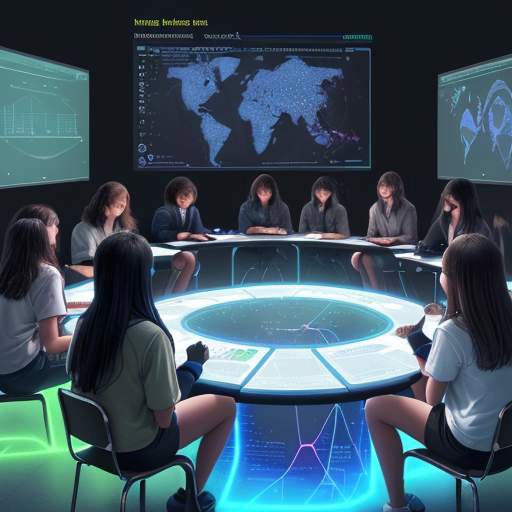
The Future of the Classroom: Teachers as Guides, Not Gatekeepers
The integration of AI necessitates a fundamental shift in the role of the educator. Teachers are not being replaced; they are being elevated. Their role is shifting from being the primary source of information (the gatekeeper) to becoming the curator of knowledge, the mentor of critical thinking, and the guide of ethical use.
The modern teacher must be skilled in:
- Curating AI Tools: Knowing which AI tools are appropriate for specific learning objectives and how to integrate them ethically into lesson plans.
- Facilitating Discussion: Designing classroom activities that require human debate, empathy, and emotional intelligence—areas where AI cannot replicate.
- Teaching Meta-Cognition: Guiding students to understand how they learn best, helping them recognize their own cognitive patterns and limitations.
The classroom of the future will be a blended environment: a space where the structure and personalization of AI meet the irreplaceable warmth, wisdom, and motivational power of the human teacher.
Conclusion: Embracing the Cognitive Partner
The revolution brought by AI in education is not a threat to intellectual rigor; it is an unprecedented opportunity for human potential. By mastering these modern tools, students are gaining access to a level of personalization, research depth, and accessibility previously unimaginable.
The shift requires a mindset change: viewing AI not as a shortcut to an answer, but as a sophisticated cognitive partner that handles the mechanics of knowledge, allowing the student to focus on the art of thought.
For students, the task is to become expert prompters and critical verifiers. For educators, the mission is to redesign curricula that prioritize human skills—creativity, empathy, ethical reasoning, and complex communication—the very skills that define humanity and cannot be automated.
The AI Edge is here. By embracing it responsibly, we are not just preparing students for the next job; we are preparing them to define the next era of human achievement. The future of learning is collaborative, adaptive, and brilliantly intelligent.