The digital revolution has ushered in an era where the line between reality and fabrication is becoming increasingly porous. Among the most startling developments in this landscape is the emergence of "deepfakes"—highly realistic synthetic media created using sophisticated artificial intelligence. While deepfakes have sparked significant concerns in politics, entertainment, and security, a new and critical frontier has emerged: the academic world. As educational institutions increasingly move toward online platforms and digital submissions, the threat of deepfake technology poses a fundamental challenge to the core of academia—integrity.
From fabricated video lectures to "synthetic" student identities and AI-generated research papers that mimic human nuance, the potential for misuse is vast. To combat this, a new technological arms race has begun. The rise of deepfake detection is not just a technical hurdle; it is a necessary evolution in safeguarding the credibility of degrees, the authenticity of research, and the trust between educators and students.
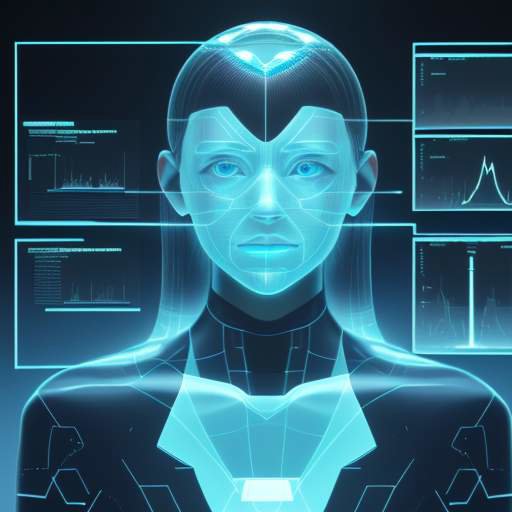
The Anatomy of the Deepfake Threat
To understand why detection is so critical, we must first understand how these fabrications are constructed. Most deepfakes are powered by Generative Adversarial Networks (GANs). In a GAN architecture, two neural networks—the generator and the discriminator—work in opposition. The generator attempts to create a fake image or video, while the discriminator tries to determine if it is real or fake. Through millions of iterations, the generator becomes so proficient at "fooling" the discriminator that the resulting output becomes indistinguishable from reality to the human eye.
In an academic context, this technology can be weaponized in several ways. A student might use a deepfake to impersonate themselves during a remote proctored exam, creating a digital mask over their face that mimics the movements and expressions of a "perfect" student. Alternatively, researchers could use AI-generated voices to create fake peer-reviewed lectures or even "ghostwrite" entire sections of academic papers using Large Language Models (LLMs) that are trained on high-level academic datasets. The goal is no longer just to cheat on a single test; it is to fabricate a persona or a body of work that bypasses the scrutiny of the peer-review process and institutional oversight.

The Erosion of Trust in Higher Education
The primary casualty of deepfake technology is trust. Academic institutions rely on the "authenticity" of the student experience and the "originality" of research. When it becomes impossible to tell if a student is actually presenting their work or if a video of a lecture was performed by a human, the foundational contract of education begins to crumble.
For instance, in online learning environments, the "identity" of the learner is paramount. If a student can use a deepfake to bypass identity verification, they can potentially enroll in courses under false pretenses or participate in group projects as a synthetic persona. Furthermore, the rise of "synthetic scholarship"—where AI generates data points, citations, and even entire methodology sections—creates a crisis for academic journals. If a paper is published that appears perfectly coherent but was actually synthesized by an AI designed to mimic high-level scholarly tone, the integrity of the scientific record is compromised.
The scale of this issue is not just about individual cheating; it is about the systemic integrity of the degree. If a university cannot guarantee that its graduates are the ones who performed the work, the value of those degrees in the job market diminishes. This necessitates a move toward more robust detection systems that can verify human presence and original thought in real-time.

The Technological Frontline: How Detection Works
As the creation of deepfakes becomes easier, the tools to detect them are becoming more sophisticated. Detection is not a single "filter" but a multi-layered approach involving several different technological indicators. One of the most effective methods involves analyzing physiological inconsistencies. For example, humans have specific ways of blinking, moving their eyes, and exhibiting micro-expressions. Early deepfakes often failed at these nuances, but modern AI is catching up. However, advanced detection systems can still find "tells" by looking for unnatural patterns in blood flow (detected through subtle skin color changes) or inconsistent heart rates reflected in the face.
Another layer of defense involves frequency analysis. When a video is synthesized, it often leaves behind "digital fingerprints" in the high-frequency components of the image. These are artifacts that are invisible to humans but glaringly obvious to an algorithm designed to scan for them. Additionally, metadata analysis plays a crucial role. Every digital file carries a trail; detecting inconsistencies between a video’s metadata and its visual content can flag potential manipulation.
Furthermore, researchers are developing "challenge-response" systems for live interactions. Instead of just watching a video, a proctor might ask a student to perform a specific, unpredictable action—such as "Hold up a piece of paper with today’s date written on it" or "Turn your head quickly to the left." These actions are incredibly difficult for real-time deepfake software to render seamlessly, as they require the AI to generate new pixels in real-time without creating visual glitches.

Institutional Adaptation and Policy Shifts
Technology alone cannot solve the problem of academic integrity; it must be paired with robust institutional policy. Universities are beginning to realize that they cannot simply "out-tech" every possible fraud. Instead, they are moving toward a hybrid model of verification and pedagogical redesign.
This means moving away from high-stakes, remote, multiple-choice exams—which are easily compromised by AI—and toward "authentic assessment." In an authentic assessment, students are asked to perform tasks that require human judgment, localized context, and original synthesis. For example, instead of a take-home essay on a historical event, a student might be required to record a live, unedited video of themselves explaining the nuances of the event or conducting a live debate with peers.
Furthermore, institutions are implementing "human-in-the-loop" verification systems. While AI is used to flag potential deepfakes or high-probability plagiarism, the final determination remains with a human educator. This creates a tiered defense: AI handles the massive scale of data screening, while humans handle the nuanced cases of judgment. By integrating these technologies into the curriculum, educators can create a safer environment where students are encouraged to use AI as a tool for learning rather than a shortcut to bypass the hard work of critical thinking.
The Role of Collaborative Defense
The final frontier in the fight against deepfakes is collaboration. No single university or software company can build a perfect defense alone. To truly safeguard academic integrity, there must be a unified standard for "digital provenance." This involves the development of watermarking technologies that can be embedded into official educational materials and student submissions to verify their origin.
When institutions collaborate with tech giants and cybersecurity firms, they can create a standardized "trust protocol." This would allow for a system where a digital identity is verified once and then "signed" by a trusted authority. In this scenario, a student’s participation in a remote seminar would be backed by a cryptographic key that ensures the person on the screen is indeed who they claim to be.
Moreover, there is a vital role for public awareness. Educators must teach students about the ethics of AI and the dangers of deepfakes. By fostering a culture of academic integrity, institutions can empower students to choose the path of authenticity over the shortcuts offered by synthetic media. The goal is not to create a surveillance state, but to build a transparent ecosystem where the value of human effort is protected and celebrated.

Conclusion: Securing the Future of Learning
The rise of deepfake technology presents one of the most significant challenges to academic integrity in the modern era. As the tools to create realistic synthetic media become more accessible, the "truth" of digital interactions becomes harder to verify. However, this challenge also provides an opportunity for academia to innovate. By integrating advanced detection algorithms, implementing robust verification protocols, and redesigning pedagogy to emphasize human-centric skills, institutions can build a resilient defense against the tide of deepfakes.
The ultimate goal is not just to catch "cheaters," but to preserve the sanctity of the educational journey. We must ensure that when a student earns a degree, it represents years of genuine intellectual struggle and growth. By staying ahead of the curve in deepfake detection, we can ensure that the next generation of thinkers, scientists, and leaders is defined by their authentic capabilities, not by the sophisticated masks they wear behind a screen. The battle for academic integrity is won through a combination of vigilant technology, proactive policy, and a steadfast commitment to the value of human thought.