
The rapid ascent of generative artificial intelligence has sparked a global revolution in how we interact with information, create art, and solve complex problems. From the boardroom to the laboratory, tools like ChatGPT and Midjourney are being integrated into the fabric of modern life at a pace that has left many policymakers scrambling to keep up. However, while the corporate world embraces these tools as "productivity multipliers," the education sector is approaching the technology with a much more cautious—and in some cases, restrictive—lens.
Norway, a nation known for its progressive approach to technology and high standard of living, has emerged as a significant case study in this global debate. By implementing restrictions on the use of generative AI for younger students, Norwegian educators and policymakers are raising a fundamental question: At what point does a tool for assistance become a crutch that hinders cognitive development? This isn’t just a local policy; it is a profound philosophical debate about the nature of learning in the 21st century.
The Cognitive Cost of "Easy" Answers
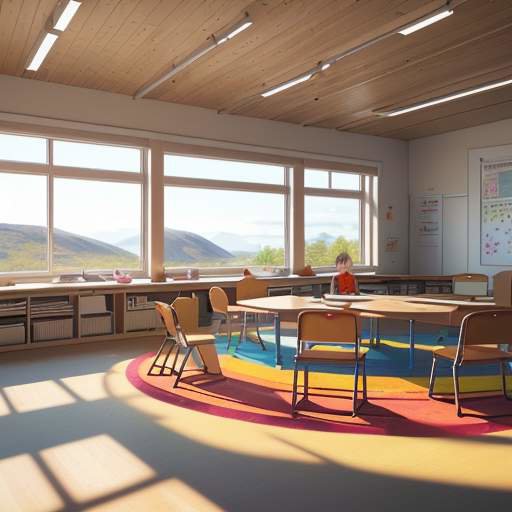
The primary concern driving the restrictions in Norway—and echoed by educators worldwide—is the impact on cognitive development. For children in their formative years, the process of learning is inextricably linked to the struggle of synthesis. When a student is tasked with writing an essay or solving a math problem, the "struggle" is where the neural pathways are formed. They are learning how to structure a thought, how to organize logic, and how to navigate the frustration of not knowing an answer immediately.
When generative AI is introduced too early into this process, it offers a "shortcut" that bypasses these critical developmental stages. If a student can prompt an AI to summarize a chapter or generate a paragraph of prose, they are no longer practicing the mental gymnastics required to internalize the material. The fear is that we are creating a generation of "prompt engineers" who can command a machine to produce a result but lack the underlying knowledge to understand why that result is correct. In the Norwegian context, the focus is on ensuring that the foundational skills of critical thinking and independent problem-solving remain the primary drivers of education.
Protecting the Foundation: Why Younger Students Need Human-Centric Learning
For primary and middle school students, the curriculum is designed to build a "scaffolding" of skills. This includes basic literacy, numeracy, and—perhaps most importantly—the ability to communicate ideas clearly. There is a significant difference between using a calculator to solve a complex equation and using an AI to generate a persuasive argument. The former is a tool for calculation; the latter is a tool for thought synthesis.
Critics of early AI integration argue that children need to master the "primitive" skills of writing and thinking before they can effectively use advanced tools. If a child hasn’t mastered the art of constructing a coherent sentence, they cannot effectively critique or refine an AI-generated output. By restricting these tools for younger students, Norway aims to protect the "sanctity of the process." They want to ensure that children learn to think for themselves before they are given a machine that can think for them. This period of education is about building the internal architecture of the mind; introducing a shortcut too early could result in a hollowed-out intellectual foundation.

The Norwegian Perspective: Balancing Innovation with Child Safety
Norway’s stance is not an "anti-technology" stance. In fact, Norway is a global leader in digital infrastructure and high-tech industries. Instead, their approach is one of "pedagogical safety." They recognize that while AI is a transformative force, its implementation must be age-appropriate and context-aware. The Norwegian government and educational bodies have argued that the primary goal of early education is to foster autonomy.
By creating a buffer zone for younger students, they are creating space for human-centric learning. This includes peer-to-peer collaboration, physical movement, and deep focus on core subjects without the distraction of algorithmic feedback loops. They argue that by delaying the introduction of generative AI until students have reached a certain level of cognitive maturity, they ensure that when students do eventually use these tools, they have the critical thinking skills necessary to use them ethically and effectively. It is a strategy of "intentional delay" to ensure that the human element remains at the center of the educational experience.
[IMAGE PROMT: A wide shot of a modern, architecturally striking school building in a Norwegian landscape, featuring large glass windows and sustainable wood elements. The surrounding environment includes mountains and a clear blue sky. The scene conveys a sense of harmony between advanced architecture and nature, symbolizing a balanced approach to technology. Cinematic lighting, high quality, 16:9 aspect ratio, final image width 650px strict, no text in image, no watermark, optimized for Flux/SD3/SDXL]
Developing Digital Literacy Without Dependency
One of the most nuanced parts of the debate is the distinction between "digital literacy" and "AI dependency." Every student needs to understand how to navigate the modern world, which includes understanding the capabilities and limitations of AI. However, there is a risk that if the transition into AI is too seamless, students will become dependent on it as a primary mode of thinking rather than a secondary tool for assistance.
The Norwegian model suggests that literacy should be taught through the lens of "how things work." Instead of letting a student use an AI to write a poem, they might learn about the history of poetry, the mechanics of rhyme and meter, and the evolution of language. Only after mastering these components would they be introduced to AI as a tool for brainstorming or research. This ensures that the student remains the master of the technology, rather than the technology becoming the master of the student’s output. The goal is to create "informed users" rather than "passive consumers."
The Role of Teachers in a Post-AI World
Ultimately, the debate in Norway highlights the indispensable role of the teacher. In an era where information is ubiquitous and AI can generate content in seconds, the teacher’s role shifts from "source of information" to "guide of inquiry." When AI is restricted for younger students, it forces a return to the human element of teaching—mentorship, emotional intelligence, and the ability to inspire curiosity.
Teachers are the ones who can identify when a student is struggling with a concept versus when they are simply looking for an easy way out. By limiting the "easy" options provided by AI in early education, teachers are encouraged to engage more deeply with their students’ thought processes. They can foster a classroom environment where the goal isn’t just to produce a correct answer, but to understand the journey toward that answer. This human-centric approach is what many believe will be the ultimate defense against the homogenizing effects of automated intelligence.
Conclusion: Finding the Middle Ground
The debate over AI in schools is not a binary choice between "total ban" and "unregulated adoption." It is a nuanced discussion about timing, maturity, and the preservation of human cognition. Norway’s decision to restrict generative AI for younger students serves as a vital case study in this balance. By prioritizing the development of foundational skills—critical thinking, deep focus, and independent problem-solving—they are ensuring that the next generation possesses the internal tools necessary to navigate a world increasingly dominated by artificial intelligence.
The goal is not to shield children from the future, but to prepare them for it. To do that, they must first learn to think, to write, and to create in ways that are uniquely human. By creating a "buffer zone" of traditional, high-engagement learning, countries like Norway are attempting to ensure that when the students finally do step into the world of AI, they do so not as passive followers of an algorithm, but as capable masters of their own minds. The future of education lies in this harmony: using technology to enhance human potential without eroding the very skills that make us human in the first place.



















Recent Comments