The sudden emergence of large language models (LLMs) like GPT-4, Claude, and Gemini has acted as a profound "tectonic shift" in the landscape of higher education. For decades, the academic model was built on the assumption that human cognition—specifically the ability to synthesize information, write coherent essays, and solve complex problems—was the primary metric of student competence. However, when an AI can perform these tasks in seconds, the fundamental "why" and "how" of university education are being forced into a radical evolution.
Universities are no longer just reacting to the threat of academic dishonesty; they are proactively redesigning their curricula to prepare students for a world where AI is not a novelty, but a foundational layer of professional life. The shift is moving away from teaching students how to produce content toward teaching them how to curate, critique, and collaborate with intelligent machines.

From Information Retrieval to Critical Synthesis
For over a century, much of higher education was centered on the acquisition and retention of information. Students were expected to read, memorize, and then reproduce that information in various formats. In the age of AI, "knowing" a fact is no longer the primary goal because the sum total of human knowledge is now accessible via a prompt.
Consequently, universities are shifting their focus toward higher-order thinking. If an AI can summarize a 50-page white paper or explain quantum physics in the style of a poet, the student’s role must change from "information retriever" to "critical analyst." Faculty members are restructuring syllabi to emphasize the evaluation of information. Students are now being taught to identify hallucinations, recognize bias in algorithmic outputs, and synthesize multiple conflicting sources into a coherent, nuanced argument. The goal is to produce graduates who can look at an AI-generated output and say, "This is factually correct, but it lacks the necessary ethical nuance for this specific context."

Integrating AI as a "Co-Pilot" in the Classroom
Rather than banning AI—a move that many educators argue is both impractical and counterproductive—forward-thinking institutions are integrating it into the curriculum as a "co-pilot." This involves teaching students how to use AI tools effectively to enhance their productivity and creativity.
In engineering and computer science, this means moving beyond basic coding to "prompt engineering" and collaborative debugging. Students are learning to use AI to generate boilerplate code, identify bugs, and suggest optimizations, allowing them to focus on the high-level architecture of a project. In the humanities, students are using AI for brainstorming, outlining complex arguments, and simulating historical personas for interactive debates. The pedagogical shift here is profound: the "work" is no longer just the final product; it is the iterative process of refining prompts, correcting AI errors, and refining the human input to achieve a superior result.

Cultivating the "Human Moat": Soft Skills and Empathy
One of the most significant reasons for overhauling curricula is the identification of what AI cannot do. As machines become more proficient at logic and data processing, the value of uniquely human traits—often called "soft skills"—skyrockets. Universities are doubling down on these areas to create a "human moat" that protects students’ career prospects from automation.
These skills include emotional intelligence (EQ), complex negotiation, ethical leadership, and cross-disciplinary empathy. For example, in medical schools, the focus is shifting toward the "art of medicine"—the ability to sit with a patient, understand their fears, and navigate the nuances of end-of-life care. In law schools, while AI can scan thousands of documents for precedents, the ability to argue a case before a human jury or negotiate a nuanced settlement remains a human domain. By emphasizing these areas, universities ensure that students are not just "human versions" of an algorithm, but leaders who can manage human relationships and navigate the moral complexities of the 21st century.
Revolutionizing Assessment and Pedagogy
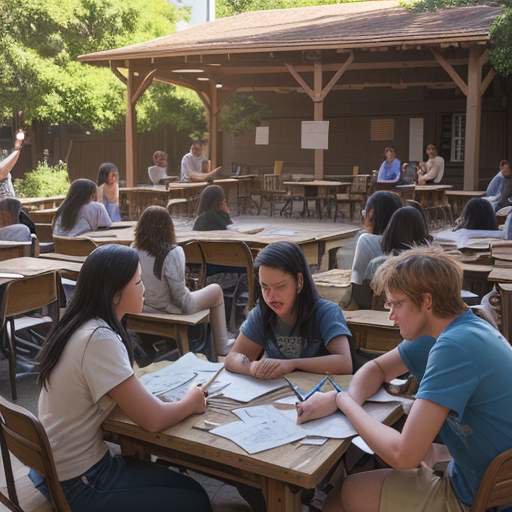
Perhaps the most practical change occurring on campus is the overhaul of how students are graded. The traditional "take-home essay" is becoming increasingly difficult to use as a primary assessment tool because AI can generate high-quality prose in seconds. To combat this, universities are moving toward "process-based" assessment.
Instead of grading only the final paper, instructors are now grading the evolution of an idea. This might include:
- Oral Exams: Testing a student’s ability to defend their thesis in real-time.
- In-Class Demonstrations: Requiring students to perform a task or solve a problem live.
- Portfolios: Requiring a collection of work that shows the iterative steps of a project, including early drafts and "failed" attempts.
- Collaborative Projects: Grading students on their ability to work in teams to solve multi-faceted problems that require human interaction.
By shifting the focus from the product to the process, universities can still accurately measure a student’s mastery of a subject while making it nearly impossible for a bot to "cheat" the system.
Ethical Literacy and AI Governance
As AI becomes more integrated into infrastructure, the ethical implications of its use become a critical area of study. Universities are introducing mandatory modules on AI ethics, data privacy, and the societal impacts of automation. This isn’t just for computer science majors; it’s for everyone.
Students need to understand the "black box" of algorithmic decision-making. They must learn about the biases inherent in training data, the environmental costs of running massive data centers, and the implications of AI on labor markets. By fostering a sense of "ethical stewardship," universities are preparing students to be the architects of a responsible future. They aren’t just learning to use the tools; they are learning how to build guardrails for those tools, ensuring that the next generation of leaders can navigate the complexities of technology without sacrificing human values.

Conclusion: The Symbiotic Future of Education
The "AI Revolution" is not a reason to retreat from technology; it is a call to deepen our commitment to human-centric education. By overhauling their curricula, universities are moving toward a more profound model of learning—one that recognizes the power of machines to handle the mundane and the complex, while elevating the human capacity for creativity, empathy, and critical judgment.
The goal is no longer to produce graduates who can compete with machines in speed or volume, but to produce thinkers who can command those machines to solve the world’s most pressing problems. In this new era, the most valuable skill a student can possess is not the ability to provide an answer, but the ability to ask the right question. The future of education lies in this symbiosis: where the human spirit provides the purpose and the machine provides the power.