The landscape of modern education is undergoing a seismic shift. For decades, the integration of technology in schools followed a linear path: from the introduction of personal computers and the internet to the rise of interactive whiteboards and mobile learning. However, the emergence of Generative Artificial Intelligence (AI) has accelerated this evolution into something far more profound. We are no longer just adding tools to the classroom; we are introducing "intelligence" into the pedagogical process.
As students begin to interact with Large Language Models (LLMs) and automated tutoring systems, a critical concept has emerged as the cornerstone of safe adoption: Guardrails. In the context of AI, guardrails are the technical, ethical, and safety boundaries that prevent these powerful models from generating harmful content, hallucinating facts, or compromising academic integrity. For students, understanding these guardrails is not just a technical requirement—it is a fundamental part of modern digital literacy.

The Evolution of Classroom Tools and the Rise of Generative AI
To understand why "guardrails" are so critical today, we must look at how educational technology has evolved. Early educational tech was primarily "deterministic." When a student used a calculator or a basic educational app, the output was predictable. If you entered a math problem, the machine provided a specific, pre-programmed answer. The "rules" were hard-coded into the software.
Generative AI, however, is "probabilistic." It predicts the next most likely word or pixel based on massive amounts of training data. This capability allows it to write essays, compose music, and debug code in ways that traditional software could not. But because the output isn’t pre-determined, there is a risk of "hallucination"—where the AI presents false information with extreme confidence—or the inclusion of biased and inappropriate content.
The transition from deterministic tools to generative ones means that students can no longer rely on the software to be inherently "correct" in every instance. They must learn to navigate a system that is creative but requires oversight. This is where the revolution of guardrails comes in. By implementing safety layers, developers ensure that the AI stays within the bounds of educational safety, filtering out toxic content and grounding the AI’s responses in verified facts.
Understanding Guardrails: The Invisible Safety Net
When we speak about "guardrails" in the classroom, we are referring to a multi-layered system designed to make AI a safe companion for learning. These aren’t just simple "on/off" switches; they are sophisticated filters and training methodologies.
First, there are content filters. These ensure that if a student asks a question about a sensitive topic, the AI provides a neutral, educational response rather than something inappropriate or harmful. Second, there is fact-checking and grounding. Modern educational AI models are often "grounded" in specific datasets—such as peer-reviewed journals or approved textbooks—to minimize the risk of hallucinations.
Finally, there are ethical guardrails. These are designed to prevent the AI from performing tasks that would violate academic integrity, such as writing an entire graded essay for a student. Instead, the guardrails encourage the AI to act as a tutor—explaining concepts, providing outlines, or generating practice problems. For the student, these guardrails are the difference between a tool that helps them learn and a tool that simply does the work for them.

Navigating the Ethics of AI and Academic Integrity
One of the primary concerns for educators is how students will navigate the "gray area" of academic honesty. With the ability to generate high-quality text in seconds, the temptation to bypass the learning process is real. However, the revolution of guardrails actually provides a roadmap for how students can use these tools ethically.
The key lies in moving from substitution to augmentation. When a student uses AI to replace their own thinking (e.g., "Write a 500-word essay on the French Revolution"), they are bypassing the learning process. When a student uses AI to augment their thinking (e.g., "Explain the causes of the French Revolution in three bullet points so I can understand the core themes"), they are using the tool as a scaffold.
Students must be taught that the AI is a collaborator, not a ghostwriter. By understanding the limits—the guardrails—students can learn to use AI for brainstorming, summarizing complex texts, or generating practice quizzes. In this model, the student remains the "pilot" of the learning journey, while the AI serves as the "navigator." This distinction is vital for maintaining integrity while embracing innovation.
Empowering Students through Prompt Engineering
To navigate the new era of classroom technology, students must master the art of communication with machines: Prompt Engineering. Because AI models are sensitive to how a question is phrased, the way a student interacts with the "guardrails" determines the quality of the output.
A "weak" prompt often leads to generic, less-useful results because it doesn’t give the AI enough context to work within its safety parameters. For example, asking "Tell me about biology" is too broad. A "strong" prompt, however, provides constraints: "Explain the process of cellular respiration as if I am a high school student, using a metaphor involving a factory."
By learning to provide specific roles, contexts, and constraints, students can steer the AI toward more productive educational outcomes. This process actually enhances critical thinking; to write an effective prompt, a student must first understand what they don’t know and exactly what information they need to acquire. It forces them to define their goals clearly, a skill that is invaluable regardless of whether they are using AI or traditional study methods.
The Role of the Teacher in a Guardrailed World
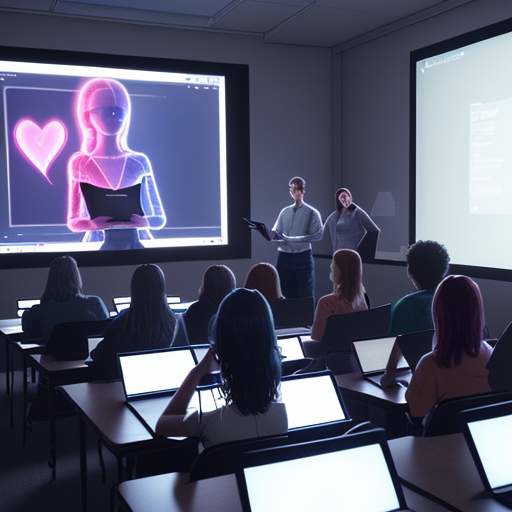
A common fear is that AI will replace the teacher. However, the reality of the "Guardrail Revolution" suggests the opposite: it empowers the teacher to become more of a mentor and less of a lecturer. When the technical guardrails handle the basic information delivery and safety checks, the human teacher can focus on higher-order skills like critical analysis, emotional intelligence, and collaborative problem-solving.
In a classroom equipped with safe, guarded AI tools, the teacher becomes a facilitator of discovery. They can help students navigate the "why" behind the facts provided by the AI. They can guide students through the ethical implications of technology and help them synthesize information from multiple sources. The teacher’s role shifts toward helping students manage their own learning paths, ensuring that the technology serves the student’s growth rather than distracting from it.
Furthermore, teachers can use these tools to provide personalized instruction at a scale previously impossible. For instance, an AI can provide instant, tailored feedback on a student’s draft, allowing the teacher to spend more time with students who need deeper, nuanced intervention. The guardrails ensure that this personalized experience remains safe and aligned with educational standards.

Preparing for a Future of Hybrid Intelligence
As we move forward, the line between "human" and "machine" learning will continue to blur. The goal of integrating AI into the classroom is not to create a world where machines think for us, but where humans can think better because of the tools at their disposal. This is the essence of the Guardrail Revolution: creating a safe space for experimentation.
Students who learn to navigate these systems today are preparing for a workforce where "AI Literacy" will be as fundamental as reading and writing. They will need to know how to work alongside intelligent systems, how to identify when those systems are failing, and how to steer them toward productive ends. By understanding the guardrails, students learn the importance of boundaries, the value of verification, and the power of intentionality.
The ultimate goal is a "hybrid" model of education. In this model, the student’s curiosity and creativity are fueled by the AI’s ability to process vast amounts of data and provide instant feedback. The guardrails ensure that this synergy remains safe, ethical, and focused on the primary goal: the growth of the human mind.

Conclusion: Embracing the New Frontier
The transition into an AI-augmented classroom is not something to be feared, but rather welcomed as a new frontier of opportunity. The "Guardrail Revolution" provides the necessary infrastructure to make this transition safe and productive. By establishing clear boundaries, we allow students to explore the capabilities of artificial intelligence without losing sight of the human elements that are central to education: critical thinking, integrity, and personal growth.
For students, the key is to remain curious and proactive. They must engage with these tools not as magic wands that provide instant answers, but as sophisticated instruments that require skill to master. By understanding how the guardrails work, they can learn to navigate the complexities of the digital age with confidence. The future of education lies in this synergy—a world where human creativity is amplified by machine intelligence, all within a framework designed to protect and empower the learner.
As we move forward, let us view these technologies not as replacements for traditional methods, but as powerful additions to the educational toolkit. When students learn to navigate these systems responsibly, they aren’t just learning how to use a new piece of software; they are learning how to navigate a new world. The guardrails are there to ensure that as we step into this unknown territory, the path remains clear, safe, and ultimately, full of possibility.