
Chicago Style Citation Guide (18th Edition) With Examples
Chicago style is the citation format from The Chicago Manual of Style, used above all in history, art history, religion, philosophy and many publishing houses. Its current version is the 18th edition, published in 2024. What confuses many students is that Chicago ... Continue Reading →
How to Avoid Plagiarism: Paraphrasing, Citing and AI Rules
Many students who are accused of plagiarism did not set out to cheat. They copied a sentence into their notes and forgot where it came from, paraphrased too closely, reused an old paper or let an AI tool write a paragraph without checking the rules. The consequences ... Continue Reading →
How to Write a Research Paper: A Step-by-Step Guide
A research paper is more than a long essay. You have to find a question worth answering, gather and evaluate sources, build an argument from evidence and cite everything correctly. It feels overwhelming when you look at it as one huge task, but it becomes manageable ... Continue Reading →
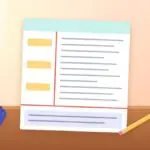
The Cornell Note-Taking Method: How to Use It in Class
Most students take notes the same way: write down as much as possible during the lecture, then never look at the notes again until the night before the exam. The Cornell note-taking method changes that with a simple page layout that turns your notes into a self-test. ... Continue Reading →
MLA Format and Citation Guide (9th Edition) With Examples
MLA style is the citation format used in most English, literature, language and humanities courses. If your instructor asks for “MLA format,” they mean two things: a specific page layout for your paper, and a consistent way to cite every source in the ... Continue Reading →

Berkeley Professor Stops Grading Homework Over AI: How Teachers Are Adapting
A University of California, Berkeley professor has officially stopped grading students’ homework for accuracy due to concerns that an ai tool is making it increasingly difficult for educators to use traditional written assignments to assess student abilities. ... Continue Reading →

How to Study Effectively: 6 Evidence-Based Study Techniques
Most students study the way they were shown at school: reread the notes, highlight the important parts, and hope it sticks. Research in cognitive psychology shows that these are among the least effective methods. The good news is that the techniques that work best ... Continue Reading →

Best Apps for University Students (2026): Free Study Tools
The right apps can save you hours every week at university: notes that are searchable, a calendar that reminds you of every deadline, flashcards that schedule your revision, and a reference manager that formats your bibliography. The good news is that most of the ... Continue Reading →

The Feynman Technique: Learn Anything by Explaining It Simply
You have read the chapter twice, the slides look familiar, and you feel ready. Then a friend asks a simple question about the topic and you cannot answer it. That gap between “it looks familiar” and “I understand it” is exactly what the ... Continue Reading →











Recent Comments