

Welcome to the new era of academia. By 2026, Artificial Intelligence is no longer a novelty but the foundational infrastructure of learning. This shift demands a reimagining of what it means to teach and learn. We are moving beyond static curriculums toward dynamic, responsive educational ecosystems. The traditional model of the lecture hall, where information flows in one direction from a professor to passive students, is rapidly becoming obsolete. Instead, we are witnessing the rise of a symbiotic relationship between human intellect and machine intelligence. This transformation is not merely about adopting new tools; it is about fundamentally altering the pedagogy of higher education to meet the demands of a rapidly changing global economy. As we stand on the precipice of this new decade, institutions must ask themselves how they can leverage these technologies to foster deeper understanding, critical thinking, and genuine innovation. The stakes are high, as the ability to adapt to this technological shift will determine the future relevance of universities and colleges worldwide.
The End of One-Size-Fits-All Learning
The most immediate impact of AI in 2026 is the ability to personalize education on a scale previously unimaginable. In the past, a professor had to design a curriculum that satisfied the lowest common denominator of the class. Today, AI-driven platforms can adapt to the specific learning pace and style of each individual student. Imagine a scenario where a student struggling with calculus receives immediate, tailored explanations, while another student ready for advanced concepts is challenged with complex problem sets instantly. This level of customization ensures that no student is left behind, and no student is bored. It transforms the classroom from a factory floor into a bespoke workshop for the mind.


This personalization extends beyond just academic subjects. AI tutors can monitor mental health indicators, suggesting breaks or resources when stress levels rise. They can also identify gaps in foundational knowledge before they become stumbling blocks in advanced coursework. By addressing these issues early, institutions can significantly improve retention rates and graduation rates. The goal is to create an environment where every student feels supported and understood, regardless of their background or prior academic history. This inclusive approach is essential for building a diverse and equitable workforce.
Faculty as Architects, Not Just Lecturers
The role of the professor is evolving from a primary source of information to a mentor and guide. With AI handling the delivery of factual content and basic grading, faculty members are freed to focus on what machines cannot do: inspire, mentor, and foster critical thinking. Professors are becoming architects of the learning experience, designing the frameworks within which students explore complex ideas. They are curating the questions that matter most in their fields, rather than simply answering them. This shift requires a different skill set for educators, one that emphasizes emotional intelligence, ethical reasoning, and the ability to facilitate deep discussions.
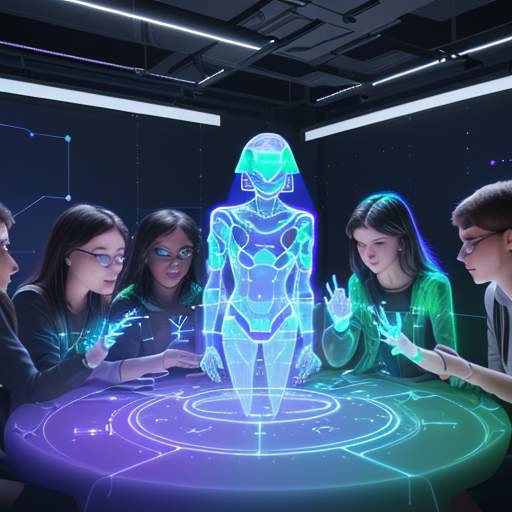
In this new model, the classroom becomes a laboratory for inquiry. Professors guide students through the process of validating AI-generated information, teaching them to spot biases and verify sources. This is a crucial skill in an age of information overload. The professor’s value lies in their ability to contextualize knowledge and connect disparate ideas. They become the human anchor in a sea of digital data, ensuring that students remain grounded in reality and ethical considerations. This partnership between human and machine allows for a depth of learning that was previously impossible to achieve with traditional methods alone.
Administrative Efficiency and Student Support
Beyond the classroom, AI is revolutionizing the administrative side of higher education. Bureaucratic tasks such as scheduling, enrollment management, and financial aid processing are being automated. This efficiency allows administrative staff to focus on student success initiatives rather than paperwork. For example, AI chatbots can handle routine inquiries about registration or housing, freeing up human advisors to tackle complex cases involving financial hardship or academic probation. This human touch is vital for students facing personal crises.

Furthermore, AI can predict student attrition risks by analyzing patterns in attendance, assignment submission, and engagement levels. Early intervention becomes possible, allowing support services to reach out to students before they drop out. This proactive approach to student support is a game-changer for institutional sustainability. By reducing dropout rates, universities can maintain their reputation and secure funding. The integration of these systems creates a seamless experience for the student, removing friction points that often discourage enrollment or continuation.
Ethical Frontiers and Academic Integrity
As AI becomes more integrated, the conversation around academic integrity becomes more complex. The definition of plagiarism is shifting. If a student uses an AI tool to draft an essay, is it their work? Institutions are developing new frameworks to teach responsible AI use. The focus is moving from policing to educating. Students are learning to use AI as a co-pilot rather than a replacement for their own thinking. This requires a new set of guidelines and a culture of transparency.

Ethical considerations also extend to the data used to train these AI models. Universities must ensure that the algorithms they use do not perpetuate historical biases. This involves rigorous auditing of AI tools before adoption. Faculty and students must be trained to recognize and mitigate these biases. The goal is to create a fair and just educational environment where technology serves to empower rather than oppress. This ethical vigilance is a core component of the modern curriculum, ensuring that graduates are prepared to lead responsibly in their respective fields.
Preparing the Workforce for 2030
Finally, the transformation of higher education is driven by the needs of the future workforce. The skills required in 2030 will differ significantly from those needed today. Creativity, adaptability, and emotional intelligence are becoming the most valuable assets. AI can handle repetitive tasks, but it cannot replicate human empathy or genuine innovation. Universities are adjusting their programs to emphasize these soft skills alongside technical proficiency. Interdisciplinary programs are becoming more common, encouraging students to combine knowledge from different fields to solve complex problems.

This preparation extends to lifelong learning. The half-life of a learned skill is shrinking rapidly. Graduates must be equipped with the ability to unlearn and relearn continuously. AI platforms can facilitate this by providing up-to-date training modules that keep skills current. This flexibility is essential for career longevity in a volatile job market. By fostering a culture of continuous improvement, universities ensure their graduates remain competitive throughout their careers.
Conclusion
The evolution of higher education is not optional; it is imperative. Every course and every classroom must adapt to the realities of 2026 and beyond. By embracing AI as a partner rather than a threat, institutions can unlock new potentials for learning and discovery. The future of education lies in the synergy between human creativity and machine efficiency. As we move forward, the focus must remain on the human element—on the students, the faculty, and the communities they serve. Technology is the tool, but the mission remains the same: to cultivate informed, ethical, and innovative thinkers who can navigate the complexities of the modern world. The journey has just begun, and the destination is a brighter, more accessible future for all learners.