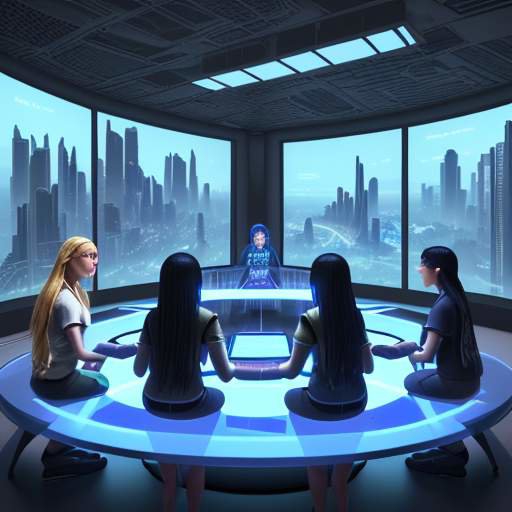
The traditional classroom, for centuries, was defined by a physical boundary: four walls, a chalkboard, and a teacher delivering knowledge from the front. However, we are currently witnessing a seismic shift in the pedagogical landscape. The emergence of Spatial AI and Extended Reality (XR)—which encompasses Virtual Reality (VR), Augmented Reality (AR), and Mixed Reality (MR)—is dismantling these boundaries. We are moving away from a model of "learning about" a subject to "experiencing" it.
In this new era, students are no longer passive observers of 2D images on a screen; they are active participants in 3D environments. Spatial AI provides the "brain" for these experiences, allowing digital environments to understand physical space and react intelligently to student actions. By merging sophisticated AI with immersive technologies, educators can create learning environments that are not only more engaging but also significantly more effective at fostering deep understanding and retention.

From Textbooks to Teleportation: The Evolution of EdTech
To understand where we are going, we must look at how far we have come. Educational technology has evolved through several distinct waves. The first was the era of Instructional Media, where tools like projectors and overhead transparencies were used to broadcast information. The second wave brought the Digital Revolution, introducing personal computers and the internet, which allowed for interactive content and global access to information.
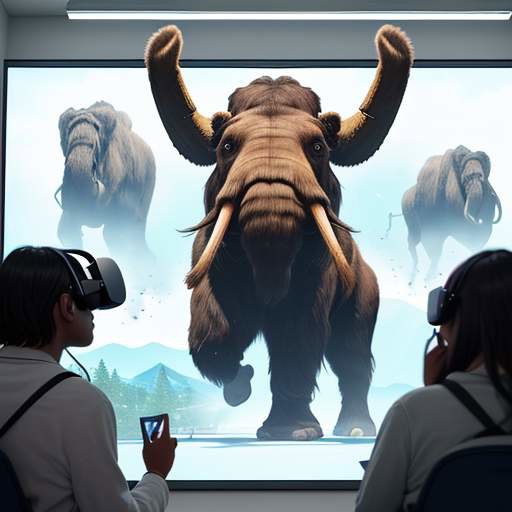
The third, and current, wave is the Immersive Revolution. This shift is driven by the convergence of high-speed connectivity, advanced graphics processing, and Spatial AI. Unlike a tablet or a laptop, XR devices place the student inside the content. When a student studies the solar system through a standard textbook, they are visualizing a 3D object in a 2D space. When they use an XR headset powered by Spatial AI, they can walk among the planets, see the scale of the rings of Saturn, and witness the gravitational pull of the sun in real-time. This transition from "viewing" to "inhabiting" is the core of the transformation in student experience.
Defining Spatial AI: The Intelligence Behind the Experience
While "XR" refers to the hardware and the visual interface, "Spatial AI" is the intelligence that makes those experiences interactive and intelligent. Spatial AI involves machines that can perceive, understand, and interact with the 3D world. In an educational context, this means the environment isn’t just a pre-recorded movie; it is a dynamic space that understands physics, geometry, and human intent.
For example, if a student in a chemistry simulation "pours" a liquid into a beaker, Spatial AI calculates the volume, the chemical reaction, and the resulting physical change in the digital environment. It allows for Simultaneous Localization and Mapping (SLAM), which lets AR devices place digital objects in the real world accurately. This means a student could place a 3D model of a human heart on their actual desk and "dissect" it with their hands. By leveraging AI to interpret spatial data, educational platforms can provide personalized feedback, adjusting the difficulty or the path of the lesson based on where the student is looking, what they are touching, and how they are moving through the space.
Enhancing Engagement through Presence and Agency
One of the primary challenges in traditional education is maintaining student engagement. The "attention economy" makes it difficult for students to focus on abstract concepts presented in a linear fashion. XR solves this by introducing the concept of Presence—the psychological sense of being "there" in a virtual environment. When a student feels present, their brain processes the experience similarly to a real-life event, which significantly enhances memory retention.
Furthermore, Spatial AI provides Agency. In a traditional lecture, a student’s agency is limited to taking notes or asking questions. In an XR environment, students have the agency to explore. They can choose which part of a historical site to visit first, which chemical compound to mix, or how to navigate a complex engineering problem. This "active learning" model aligns with constructivist educational theories, which suggest that students learn best when they are actively constructing knowledge through experience rather than passively receiving it. By turning a lesson into a quest or an exploration, educators can tap into the intrinsic motivation of students, making the learning process feel less like work and more like discovery.
Revolutionizing Subject-Specific Learning
The impact of Spatial AI and XR is perhaps most visible in specialized fields where abstract concepts are difficult to visualize or dangerous to practice in real life.
Medicine and Healthcare: Students can practice complex surgeries on high-fidelity 3D models that react like real human tissue. They can "walk" through the human circulatory system to understand pathology, a feat impossible with traditional methods. Engineering and Architecture: Instead of looking at blueprints, students can walk through a 3D model of a bridge they designed, testing for structural integrity in a simulated environment. They can see how different materials react to stress or environmental factors in real-time. History and Geography: Rather than reading about the French Revolution, students can stand in a virtual "place" during the events, seeing the scale of the crowds and the architecture of the era. This creates an emotional connection to history that a textbook cannot replicate.

Overcoming the Hurdles: Accessibility and Training
Despite the immense potential, the transition to Spatial AI-driven education is not without challenges. The primary concern is the Digital Divide. High-quality XR hardware and the computing power required for real-time Spatial AI can be expensive. To ensure equitable access, educational institutions must advocate for subsidized technology and "hub" models where students can access high-end equipment in school settings.
Another significant hurdle is Teacher Training. Educators are not just being asked to adopt a new tool; they are being asked to change their pedagogy. Teachers need to be trained on how to facilitate learning in 3D spaces, how to guide students through immersive experiences, and how to integrate these tools into existing curricula. The goal isn’t to replace the teacher with an AI-driven simulation, but to empower the teacher with a more powerful set of tools to engage their students. When implemented correctly, the technology becomes a bridge between the student and the complex, often abstract concepts of the modern world.

The Future: A Seamless Blend of Physical and Digital
Looking ahead, the line between "online" and "offline" learning will continue to blur. We are moving toward a Hybrid Learning model where Spatial AI allows for remote collaboration in shared 3D spaces. A student in Tokyo and a student in New York could work together on a virtual engine design in a shared 3D workshop, feeling as though they are standing side-by-side.
Furthermore, the integration of Generative AI with Spatial AI will allow for even more dynamic content. Future educational platforms will be able to generate unique, personalized scenarios for every student. If a student struggles with a physics concept, the system could automatically generate a customized 3D simulation tailored to their specific point of confusion. This level of personalization was once a dream; with the power of Spatial AI, it is becoming a reality.
Conclusion: The New Frontier of Learning
The rise of Spatial AI and XR represents more than just a technological upgrade; it is a fundamental shift in how we interact with knowledge. By moving from 2D representations to 3D experiences, we are providing students with the "presence" they need to feel engaged and the "agency" they need to feel empowered.
While challenges regarding cost and training remain, the potential for deeper understanding, higher engagement, and safer practical training is too significant to ignore. As these technologies mature, the classroom of the future will not be a place where students sit and listen; it will be a gateway to worlds of discovery, where the only limit to what they can learn is the boundary of their imagination. The era of immersive learning has arrived, and it is transforming the student experience from passive consumption into an active, lifelong journey of exploration.