The traditional classroom, a model largely unchanged since the Industrial Revolution, is facing its most significant disruption in over a century. For decades, the "one-size-fits-all" approach to education aimed to standardize knowledge for the masses, but it often left behind those who didn’t fit the mold. Today, the rapid ascension of Artificial Intelligence (AI) is offering a radical alternative: a personalized, adaptive, and potentially "teacherless" educational landscape. While the term "teacherless" may sound dystopian to some, it sparks a profound debate about the role of technology versus human connection in the cultivation of the human mind.
As we stand at this crossroads, we must ask: Is AI merely a tool to assist educators, or is it poised to replace the fundamental role of the teacher? To answer this, we must explore the capabilities of adaptive learning, the rise of 24/7 AI tutors, the automation of administrative tasks, and the irreplaceable value of human empathy.

The Power of Personalized Learning Paths
The most immediate advantage of AI in education is its ability to provide hyper-personalized learning paths. In a traditional classroom, a teacher must pace the lesson for thirty students simultaneously. This inevitably results in some students feeling bored because the material is too easy, while others feel overwhelmed because it is moving too fast.
AI algorithms change this dynamic by analyzing student performance in real-time. If a student struggles with a specific algebraic concept, the AI identifies the foundational gap—perhaps a misunderstanding of fractions—and immediately pivots the curriculum to address that specific weakness. This "mastery-based" progression ensures that no student moves forward until they have truly grasped the material. By tailoring the difficulty, pace, and content style (visual, auditory, or interactive) to the individual, AI creates a bespoke education for every learner, regardless of their starting point.
24/7 Mentorship: The Rise of AI Tutors
One of the greatest barriers to student success is the "homework wall"—the moment a student gets stuck at home and has no one to ask for help. A human teacher can only be available during school hours, but an AI tutor is available at 10:00 PM on a Sunday.
Modern Large Language Models (LLMs) and specialized educational AI can act as tireless tutors. Unlike a static textbook, these systems can engage in Socratic dialogue, asking the student questions to lead them to the answer rather than simply providing it. They can explain the same physics concept in five different ways until one clicks for the student. This instant feedback loop is crucial for building confidence. When a student can ask "Why?" a thousand times and receive a patient, accurate response every time, the anxiety of learning is significantly diminished.
Automating the Administrative Burden
To understand if schools will become "teacherless," we must look at what teachers actually do during their day. Statistics suggest that a significant portion of a teacher’s time is spent on administrative tasks: grading multiple-choice tests, tracking attendance, managing schedules, and filling out compliance reports. These are tasks that do not require human empathy or inspiration; they require organizational precision—something AI excels at.
By automating these "back-end" functions, the role of the teacher changes from a grader and administrator to a mentor and coach. When AI handles the data entry and the initial grading of assignments, the human teacher is freed to spend more one-on-one time with students who need emotional support or complex project guidance. In this sense, AI doesn’t remove the teacher; it removes the "drudgery" from the teaching profession, allowing humans to focus on the parts of education that machines cannot replicate.
The Human Factor: Why Teachers Still Matter
The "teacherless" school model faces its toughest challenge when it comes to Social-Emotional Learning (SEL). Education is not just the transfer of information; it is the development of character, the cultivation of empathy, and the sparking of inspiration. A machine can explain the causes of the French Revolution, but it cannot look a student in the eye and recognize the spark of passion in their voice when they talk about social justice.
Human teachers provide a moral compass and a sense of belonging. They notice when a student is withdrawn because of problems at home; they can model conflict resolution and integrity. The "spark" of inspiration—that moment when a teacher’s passion for a subject ignites a lifelong career in that field—is a deeply human experience. A machine can provide information, but it cannot provide a shared human journey. Therefore, while the instruction might be delivered by AI, the mentorship remains a human cornerstone.
The Synthesis: AI as the Ultimate Co-Pilot
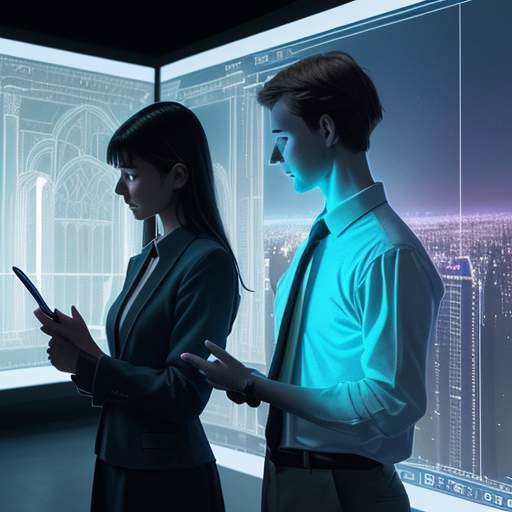
The most likely future is not a "teacherless" school, but a "teacher-augmented" one. We are moving toward a hybrid model where the teacher acts as a "conductor" of an AI-driven orchestra. In this model, the AI handles the heavy lifting of personalized content delivery and data analysis, while the human teacher guides the students through the complexities of critical thinking, ethics, and collaborative projects.
In this ecosystem, the classroom becomes a laboratory for innovation. Students might work in groups on a project, guided by an AI that provides real-time facts and data, while a human teacher facilitates debates on the ethical implications of those facts. The technology handles the "what" and the "how," while the human focuses on the "why." This synergy allows for a more inclusive education where students with different learning needs are supported by AI, while still being anchored by the vital presence of a human mentor.
Conclusion: The Evolution of the Educational Landscape
The rise of AI in education is not a zero-sum game where technology replaces humanity. Instead, it is an evolution of the educational landscape. By taking over the roles of data processing, repetitive instruction, and 24/7 support, AI allows us to redefine what it means to be a teacher. We are moving toward a future where education is more personalized, more accessible, and more efficient.
While the "teacherless" school may remain a concept for specialized remote learning or specific technical training, the core of human education will always require a human touch. The future belongs to the hybrid model—where the efficiency of the machine and the empathy of the human work in tandem to unlock the full potential of every student. We aren’t moving toward a world without teachers; we are moving toward a world where teachers are finally free to do what they do best: inspire, mentor, and lead.