

The rapid integration of Artificial Intelligence (AI) into the educational landscape has sparked a profound transformation in how we conceptualize learning, particularly within the realm of extracurricular activities. For decades, extracurriculars—ranging from debate clubs and sports teams to coding workshops and music ensembles—have served as the primary laboratory for students to develop "soft skills" like leadership, teamwork, and creative problem-solving. Today, these laboratories are being equipped with sophisticated tools: large language models (LLMs), generative image engines, and automated coding assistants.
While these technologies offer unprecedented opportunities for innovation, they also present a significant challenge to the traditional pillars of academic integrity and human-centric development. Educators, parents, and students find themselves at a crossroads, navigating the thin line between utilizing AI as a powerful co-pilot for human creativity and allowing it to become a shortcut that bypasses the essential struggles of the learning process. This exploration dives into how youth programs can embrace the AI revolution while safeguarding the intrinsic value of human effort and integrity.

The Evolution of Extracurricular Learning in the Digital Age
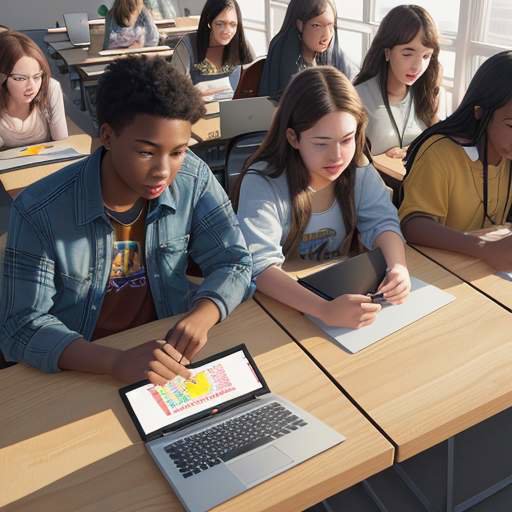
Historically, extracurricular activities were designed to provide a space where students could fail safely and experiment freely. In the context of modern education, this "safe space" is becoming increasingly digitized. For instance, a student in a debate club might now use AI to research complex geopolitical nuances in seconds, while a student in a coding club might use AI-driven debuggers to solve syntax errors instantly.
The shift here is not just about the tools; it is about the speed of iteration. AI allows students to bypass "the grind" of preliminary research or basic troubleshooting. While this can be exhilarating, it demands a new pedagogical approach. Educators must decide whether the goal of an extracurricular activity is the product (a winning debate, a working app, a finished painting) or the process (the hours spent researching, the frustration of debugging, the evolution of a creative idea). To maintain integrity, the focus must shift toward the process. When students use AI, they should be required to document how the tool assisted them, what prompts were used, and how they critically evaluated the AI’s output. By doing so, the technology becomes a transparent part of the workflow rather than a hidden shortcut.
AI as a Catalyst for Creative Exploration
One of the most compelling arguments for integrating AI into youth extracurriculars is its ability to democratize creativity. Not every student has the innate technical skill to build a complex website from scratch or the artistic training to render a photorealistic portrait. AI can bridge that gap, acting as a "force multiplier" for imagination.
In a music club, for example, a student with a brilliant melody but no knowledge of music theory could use AI tools to suggest harmonies or orchestrations. In a creative writing workshop, an author struggling with "blank page syndrome" could use an LLM to brainstorm plot points or descriptive metaphors. This doesn’t diminish the student’s role; rather, it allows them to focus on high-level conceptualization and curation.

When students engage with these tools, they are learning a new form of literacy: "prompt engineering" and "algorithmic curation." They are learning how to communicate with machines to achieve human goals. This is a vital skill for the 21st-century workforce. The key to maintaining integrity here is ensuring that the student remains the "director" of the project. The AI should be the instrument, much like a piano or a paintbrush, but the vision must remain uniquely human.
Navigating the Integrity Gap: The Risks of the Shortcut
The primary concern regarding AI in youth education is the erosion of critical thinking. If a student can generate a perfectly structured essay on ethics or a complex piece of code with a single prompt, they may bypass the cognitive "heavy lifting" that leads to genuine mastery. This is particularly concerning in extracurricular settings where the goal is personal growth.
To combat this, educators must move away from "output-based" evaluation. Instead of grading a final essay or a finished piece of software, mentors should assess the evolution of the project. This could involve:
- Reflective Journals: Students document how they used AI and why they chose specific prompts.
- Comparative Analysis: Students generate two versions of a project—one assisted by AI and one purely human—and write a critique on the differences in quality, depth, and nuance.
- Live Demonstrations: In coding or debate clubs, students must be able to explain the logic behind their work in real-time, regardless of whether AI helped generate the initial draft.
By making the "hidden" work visible, educators can ensure that AI serves as a scaffold for learning rather than a substitute for it. The goal is to create a "hybrid" intelligence where the student’s critical thinking guides the machine’s processing power.
The Role of the Mentor: From Proctor to Guide
As AI becomes ubiquitous, the role of the educator in extracurricular programs must shift from a "gatekeeper" of knowledge to a "guide" of ethics and methodology. In an age where information is infinitely available and can be synthesized instantly, the teacher’s most important role is to teach students how to navigate that information responsibly.
Mentors should facilitate discussions on the ethics of AI—discussing issues like algorithmic bias, the environmental cost of training large models, and the copyright implications of generated content. By bringing these "real-world" complexities into the classroom, educators can turn a technical tool into a springboard for deep ethical debates. When a student uses an AI to generate a character for a role-playing game or a script for a drama club, the mentor can ask: "Is this representation fair? Does it lean on stereotypes? How can we refine the output to be more inclusive?" This transforms the interaction from a simple transaction between human and machine into a sophisticated exercise in critical thinking.
Cultivating Human Connection in a High-Tech World
Perhaps the most vital aspect of extracurricular activities is the social-emotional component. These programs are designed to build community, foster peer-to-peer collaboration, and develop empathy. There is a risk that an over-reliance on AI could lead to a more isolated experience where students interact more with their devices than with each other.
To balance innovation with integrity, programs must intentionally design "human-only" zones or collaborative milestones. For example, while a student might use AI to help research a science project, the final presentation should be a collaborative, live performance where they must interact with their peers and answer spontaneous questions. The technology can provide the data, but the human connection provides the meaning.

The goal is to create a "human-centric" AI integration. This means that the technology is used to remove the mundane barriers to creativity, allowing more time for human interaction and deep collaboration. If an AI can handle the repetitive coding tasks or the initial data sorting, the students have more time to debate the implications of their findings or to collaborate on the creative direction of their team’s project.
Building a Roadmap for the Future
The integration of AI in youth extracurriculars is not a problem to be solved, but a reality to be managed. The "frontier" is not just about the technology itself; it is about how we choose to define the human role within that technology. By focusing on process over product, ethics over ease, and connection over consumption, schools can create an environment where AI enhances human potential rather than diminishing it.
The future of youth education lies in the "hybrid" model. We want students who are not only proficient with AI but are also deeply aware of its limitations and the value of their own unique, human perspectives. By establishing clear guidelines for usage, fostering a culture of transparency, and emphasizing the importance of the learning journey, we can ensure that the next generation of innovators, artists, and leaders uses AI as a tool to expand the boundaries of what is possible, while keeping their integrity firmly intact.

Ultimately, the goal of any extracurricular activity is to prepare a child for the world outside the school gates. That world is becoming increasingly intertwined with artificial intelligence. By teaching them to navigate this landscape with both curiosity and caution, we empower them to be not just proficient users of technology, but wise stewards of it. The balance between innovation and integrity is found in the realization that while AI can provide the answers, only a human can ask the truly meaningful questions.