

The educational landscape has always been defined by its relationship with technology. From the printing press democratizing knowledge to the internet connecting the globe, every major technological leap has forced institutions and individuals to redefine what it means to be educated. But today, we are standing at an inflection point unlike any before. We are not just talking about a new tool; we are witnessing a fundamental shift in the very nature of human intelligence and productivity.
The rise of sophisticated Generative AI—epitomized by models like those from OpenAI—has moved AI from a futuristic concept confined to sci-fi novels into an indispensable, everyday academic partner. This isn’t just about using ChatGPT to write an essay; it’s about leveraging AI as a cognitive amplifier, a personalized tutor, and a super-research assistant that fundamentally redefines the student experience.
At the core of this revolution is the understanding that modern education must pivot from the transfer of information (which AI handles instantly) to the mastery of intelligence—critical thinking, ethical reasoning, complex synthesis, and prompt engineering. The students who are succeeding today are not just smart; they are digitally fluent, technologically adaptive, and ethically aware users of these powerful tools.
This exploration, inspired by the cutting-edge insights of the OpenAI Futures Class, delves into how students are proactively mastering AI, transforming it from a potential academic cheat sheet into the ultimate engine for learning, research, and defining their professional success.
🧠 AI as the Ultimate Personalized Tutor: Hyper-Adaptive Learning Paths
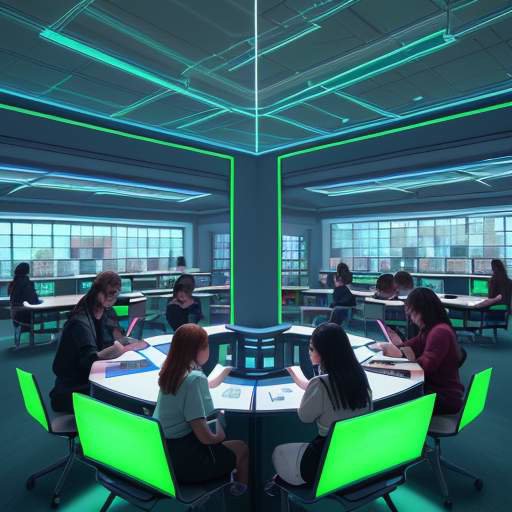
For centuries, the classroom model operated on a "one-size-fits-all" principle. Teachers, no matter how dedicated, must teach to the middle, leaving advanced students bored and struggling students overwhelmed. AI shatters this limitation. It introduces the concept of hyper-personalized education, making every student’s learning journey unique, adaptive, and intensely focused on their specific knowledge gaps and preferred learning styles.
Imagine a student struggling with organic chemistry. Instead of receiving a generic textbook chapter, an AI tutor identifies the exact prerequisite concept—perhaps molecular geometry—that is causing the roadblock. It then generates a bespoke module: interactive simulations, real-world analogies (like comparing molecule shapes to architectural designs), and practice problems tailored only to that weakness. This isn’t just remedial work; it’s surgical precision in education.
Furthermore, AI excels at simulating complex, real-world scenarios. Students can use these tools to run virtual chemistry labs, simulate historical economic crises, or practice negotiating a complex international treaty with an AI persona trained on geopolitical data. These simulations allow for failure without consequence, which is arguably the most powerful and efficient way to learn. The feedback loop is instantaneous: fail, receive detailed analysis of why you failed, adjust, and try again.
This shift means the student is no longer a passive recipient of knowledge; they are an active director of their own education. AI empowers them to become metacognitive—to learn how they learn best. This self-directed mastery is the true mark of a modern scholar.

🔬 Revolutionizing Research: From Data Overload to Insight Synthesis
The greatest challenge facing modern researchers is not a lack of information; it is an overwhelming abundance of it. Academia is drowning in data—journals, papers, raw datasets, and conflicting sources. The traditional literature review process can take months of tedious reading, cross-referencing, and summarizing. AI changes this by acting as the ultimate knowledge synthesizer.
For students tackling a complex thesis or deep research project, AI agents can perform several functions that were previously reserved for PhD-level research teams:
- Literature Mapping: Instead of manually searching hundreds of academic databases, a student can feed an AI agent a broad topic (e.g., "The economic impact of renewable energy on developing nations") and ask it to generate a comprehensive map of the existing scholarly conversation. The AI identifies key debates, major contributing scholars, conflicting hypotheses, and critical gaps in current research—all in hours.
- Hypothesis Generation: By cross-referencing disparate fields (e.g., linking behavioral psychology with climate modeling), AI can suggest novel, non-obvious research questions that a human might never connect. It helps students move beyond simply summarizing existing knowledge to actively generating groundbreaking new theories.
- Data Interpretation and Visualization: Students can upload raw, messy datasets—be it climate readings or social media sentiment—and ask the AI not just for statistics, but for narratives. The AI can suggest optimal visualization methods (heat maps, network graphs) and write the accompanying interpretive text, turning dry numbers into compelling stories.
The student of tomorrow is less of a librarian and more of a conductor, using AI to orchestrate vast oceans of information into clear, actionable insights.

🛠️ Mastering Skills Beyond Memorization: The Art of Prompt Engineering
If AI handles the information recall and synthesis, what is left for the student? The answer is the elevation of uniquely human skills. The most valuable skill in the age of AI is no longer the ability to know facts, but the ability to ask the right questions and validate the answers. This is where "prompt engineering" becomes a critical academic discipline.
Prompt engineering is the art and science of communicating effectively with an AI model to elicit the desired, high-quality output. It requires students to develop deep domain expertise, not in the subject matter itself, but in the process of inquiry.
Instead of asking, "What are the causes of World War I?", a novice prompt might receive a general essay. A skilled student, however, will prompt: "Act as a historian specializing in early 20th-century diplomatic relations. Compare and contrast the role of German naval expansionism and French colonial ambitions in escalating the crisis leading to WWI, structuring your answer with three distinct, evidence-based arguments."
This level of detailed prompting forces the student to:
- Define Scope: Knowing exactly what boundaries to set for the AI.
- Assume Persona: Directing the AI to adopt a specific expert voice (e.g., economist, philosopher, geneticist).
- Structure Output: Demanding the information be presented in a specific format (e.g., bullet points, comparative tables, argumentative essay structure).
This mastery of prompt engineering is not just a technical skill; it is a profound exercise in critical thinking and intellectual rigor. It teaches students to move from being mere consumers of content to becoming sophisticated editors and directors of artificial intelligence.
⚖️ The Ethical Imperative: Navigating Bias and Responsibility
With immense power comes immense responsibility, and the academic community must address the ethical dimensions of AI use head-on. This is perhaps the most critical section of the modern curriculum. The student who simply uses AI to bypass learning has nothing to gain; the student who masters AI for ethical growth gains everything.
The challenges are real:
- Bias Amplification: AI models are trained on historical human data, which inherently contains systemic biases (racial, gender, economic). Students must learn to detect these biases in AI-generated content—to ask: "Whose voice is missing from this narrative?"
- Hallucination and Verification: AI can confidently present completely fabricated information ("hallucinations"). The student’s job is therefore not to trust the output, but to treat it as a highly sophisticated draft that requires rigorous human verification against primary sources.
- Academic Integrity: Institutions must redefine "original work." The focus shifts from policing plagiarism (copying another person) to promoting accountability (using AI transparently and citing the model’s contribution).
The future academic success story is built on intellectual humility—the understanding that AI is a powerful co-pilot, but the human mind remains the captain. Ethical literacy is now as important as subject mastery.
💼 Career Launchpad: AI-Powered Portfolio Building
The traditional job market required a degree and a resume. The AI-powered job market requires demonstrable competence. Students are now using AI to bridge the gap between theoretical classroom knowledge and practical industry skills, transforming their academic work into tangible, portfolio-ready assets.
Instead of simply writing a paper on sustainable urban planning, a student can use AI to:
- Model a Solution: Generate initial architectural designs and cost analyses based on local climate data.
- Simulate Stakeholder Buy-in: Use AI to roleplay difficult community members (e.g., concerned property owners, skeptical politicians) and practice presenting the plan, refining their communication skills.
- Develop a Business Plan: Use AI to structure a detailed market analysis, identify potential funding sources, and draft investor pitches.
This process turns the academic year into an intense, multi-disciplinary consulting project. When a student graduates, they don’t just have a GPA; they have a portfolio of complex, AI-assisted projects that prove they can operate at a high level of professional autonomy. They are selling capability, not grades.
The synergy between human creativity and artificial intelligence is what defines the next generation of professionals—those who can lead with empathy, think critically, and wield technology like a master craftsman wielding a powerful new tool.
Conclusion: The Student of Tomorrow is the AI Conductor
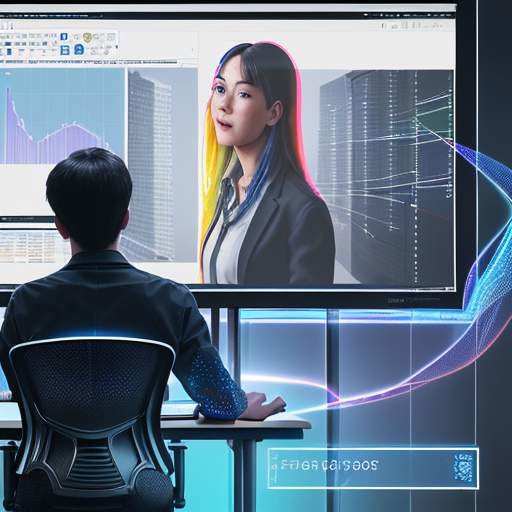
The integration of AI into education is not a trend; it is the defining infrastructure of future learning. It demands a radical shift in mindset from passive consumption to active orchestration.
Students who embrace this technology as a partner—using it to personalize their learning, synthesize massive data sets, and build verifiable, ethical portfolios—are not just keeping up with the curve; they are setting a new trajectory for human potential.
For educators, this means adapting curricula to prioritize meta-skills: critical evaluation, ethical reasoning, and sophisticated questioning. For students, it means viewing AI not as a shortcut around work, but as an accelerator toward mastery.
The future of learning is here. It is dynamic, highly personalized, intensely collaborative, and profoundly human—powered by the boundless intelligence of both student and machine. The most successful graduates of this new era will be those who become the conductors, guiding the powerful orchestra that is the synergy between human ingenuity and artificial intelligence.