The landscape of education is undergoing a seismic shift. For decades, the traditional classroom model—a single teacher delivering a standardized curriculum to a group of thirty students—has been the global standard. While this model served millions, it often failed to account for the vast differences in individual learning speeds, interests, and cognitive styles. Enter the era of Artificial Intelligence (AI) and Machine Learning (ML). In 2024, we are witnessing the transition from "one-size-fits-all" education to "personalized learning at scale." By leveraging complex algorithms, AI is no longer just a futuristic concept; it is the engine driving a revolution in how students engage with, process, and master new information.

The Power of Adaptive Learning Algorithms
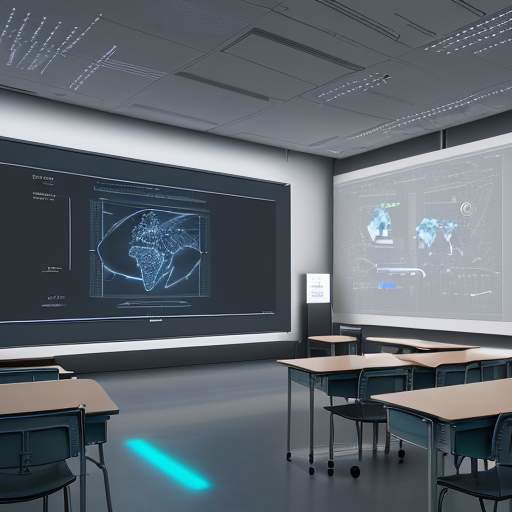
At the heart of this revolution is adaptive learning. Unlike static online courses where every student follows the same path, adaptive platforms use machine learning to create a dynamic "learning path" for every individual. These systems analyze a multitude of data points in real-time: how long a student spends on a specific problem, which types of questions they struggle with, their pace of navigation, and even the specific moments when they click for a hint.
When a student struggles with a specific mathematical concept, such as fractions, the AI doesn’t simply tell them they are wrong. Instead, it recognizes the pattern of the error and automatically serves up a prerequisite refresher or an alternative explanation that matches the student’s learning style. If a student excels quickly in a chemistry module, the system accelerates the content, skipping redundant basics to keep the learner engaged and challenged. This prevents the "boredom of the advanced" and the "frustration of the struggling," creating a flow state that is essential for deep learning.
Intelligent Tutoring Systems (ITS) and 24/7 Support
One of the most significant hurdles in traditional education is the lack of immediate feedback. A student might get stuck on a homework problem at 8:00 PM and have to wait until the next school day to ask a teacher for help. In that gap, the student’s momentum is lost, and confusion sets in. Intelligent Tutoring Systems (ITS) are closing this gap by providing 24/7, high-quality academic support.
Modern ITS platforms go far beyond simple "if-then" chatbots. Powered by advanced Natural Language Processing (NLP), these systems can understand the nuances of a student’s question. They provide scaffolded hints—guiding the student toward the answer rather than just giving it away. For example, if a student is writing an essay, an AI tutor might point out a logical inconsistency in their argument or suggest more precise vocabulary. This mimics the experience of having a personal human tutor available at all virtually any moment, allowing for a continuous cycle of trial, error, and mastery.

Empowering Educators through Automation
A common misconception is that AI is intended to replace teachers. On the contrary, the most successful implementations of AI in EdTech are designed to augment and empower educators. Teachers are often overwhelmed by administrative "drudge work"—grading hundreds of assignments, tracking attendance, and compiling data for progress reports. These tasks consume hours of time that could be spent on one-on-one mentorship and creative lesson planning.
Machine learning can automate these repetitive tasks with incredible precision. Automated grading systems can now handle not just multiple-choice questions but also provide preliminary feedback on short-answer responses and essays. Furthermore, AI-driven dashboards provide teachers with a "heat map" of the classroom’s progress. A teacher can glance at a screen and instantly see which five students in a class of thirty are struggling with a specific concept, allowing them to pull those students aside for targeted, human-centric intervention. By removing the administrative burden, AI allows teachers to return to the heart of their profession: inspiring and mentoring their students.

Breaking Barriers: Accessibility and Inclusion
Perhaps the most profound impact of AI in 2024 is its ability to foster inclusivity. For students with disabilities or those who speak different primary languages, the traditional classroom can be a daunting environment. AI-driven tools are breaking down these barriers in ways that were previously impossible.
For students with visual impairments, AI-powered image recognition and text-to-speech engines can describe visual aids and read out content in real tones. For students with hearing impairments, real-time transcription and captioning services ensure they never miss a word spoken by their instructor. Furthermore, for English Language Learners (ELL), AI translation tools can provide real-time translation of lectures, allowing them to grasp complex concepts while they are still mastering the language. By providing these "assistive layers," AI ensures that every student, regardless of their physical abilities or linguistic background, has an equal opportunity to succeed in a high-quality educational environment.
Data-Driven Insights and Predictive Analytics
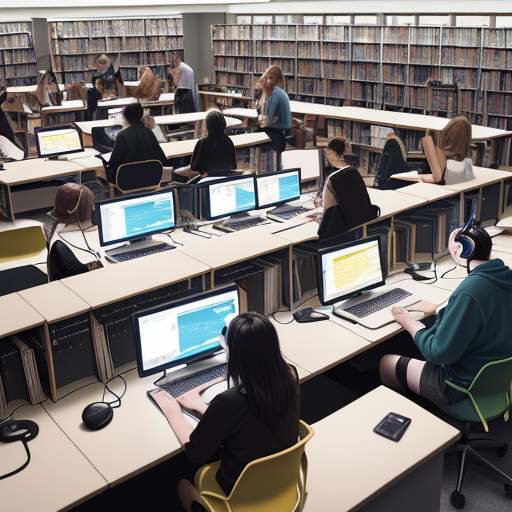
Beyond the individual student experience, AI provides institutional value through predictive analytics. By analyzing historical data and current performance metrics, machine learning models can identify "at-risk" students long before they actually fail a course or drop out of school. This proactive approach allows schools to intervene early with targeted resources, counseling, and extra support.
For example, if an algorithm detects that a student’s engagement with online modules is dropping over a three-week period, it can trigger an automatic alert for a counselor to reach out. This shift from reactive to proactive education is revolutionary. Instead of waiting for a failing grade to appear on a report card, educators can see the "early warning signs" in the data and step in to provide the necessary support. This level of insight allows schools to allocate resources more effectively, ensuring that no student falls through the cracks of a crowded system.
The Future: A Symbiosis of Human and Machine
As we move deeper into 2024 and beyond, the goal of AI in EdTech is not to create a sterile, machine-led learning environment. Rather, it is to create a symbiotic relationship where technology handles the data-heavy, repetitive, and personalized components of instruction, while human educators focus on the emotional, social, and inspirational aspects of teaching.
The future of education lies in this hybrid model. It is a world where a student’s unique learning style is respected by an algorithm, but their motivation is sparked by a teacher’s passion. By harnessing the power of machine learning, we can provide every child with a personalized education that adapts to them, rather than forcing them to adapt to a rigid system. The rise of AI-driven EdTech isn’t just about better software; it’s about creating a more equitable, effective, and inspiring path for every learner to reach their full potential.