

The history of education is a continuous narrative of adaptation. From the printing press democratizing knowledge to the internet connecting the world, every major technological leap has forced schools, universities, and students to redefine what it means to be educated. Today, we stand at the precipice of the most profound shift since the industrial revolution: the Artificial Intelligence revolution.
AI tools—from sophisticated large language models (LLMs) like Gemini and ChatGPT to specialized code generators—are no longer futuristic concepts; they are integrated into our daily workflows. For students and educators alike, this presents both unprecedented opportunities and profound challenges. The fundamental question is no longer, "What will AI do?" but rather, "How must we learn to live with AI?"
The panic often surrounding AI in education is misplaced. AI is not a replacement for human intelligence; it is a powerful, complex cognitive amplifier. Just as calculators didn’t eliminate the need to understand math, AI won’t eliminate the need to think. Instead, it is raising the intellectual bar, demanding a new suite of skills that prioritize human judgment, ethical reasoning, and creative synthesis.
This comprehensive guide explores the critical shift required in modern pedagogy and student development. To thrive in the AI-powered workforce, students must move beyond mere content consumption and master the skills of interaction, evaluation, and creation.
The Shift from Recall to Synthesis: The Primacy of Critical Thinking
For decades, the educational model often rewarded the ability to recall information—memorizing dates, formulas, and definitions. While foundational knowledge remains important, the AI era has rendered rote memorization increasingly obsolete. Why memorize the steps of a scientific process when an AI can instantly provide them?
The modern student must transition from being a knowledge container to a knowledge architect. This means shifting the focus from what you know to how you connect disparate pieces of information.
Synthesis is the ultimate skill of the 21st century. It is the ability to take three seemingly unrelated concepts—say, Renaissance art, modern data science, and behavioral economics—and synthesize them into a novel, coherent argument. This requires deep reading, comparative analysis, and the ability to see patterns where others see only noise.
Furthermore, critical thinking in the age of AI is inextricably linked to source verification. AI models are trained on massive datasets, which means they are prone to "hallucinations"—generating plausible-sounding but entirely false information. A student must develop an almost skeptical relationship with any information source, treating AI output not as truth, but as a highly sophisticated draft that requires rigorous human vetting.
Practical Application: Instead of writing an essay summarizing the causes of World War I, a student should be tasked with comparing and contrasting the economic, political, and social factors, arguing which factor was the most destabilizing, and defending that thesis with primary source evidence. This forces synthesis and critical judgment.


Mastering the Art of Prompt Engineering
If the AI revolution has a new "hard skill," it is prompt engineering.
Prompt engineering is not merely knowing how to ask a question; it is the art and science of crafting highly specific, contextual, and constrained instructions to elicit the best possible output from an AI model. It is the difference between asking, "Tell me about climate change," and asking, "Act as a climate policy expert addressing a panel of skeptical industrial CEOs. Using only verifiable data from the last five years, structure a 15-minute presentation outline that addresses the economic viability of carbon capture technology while maintaining a tone of urgent, yet pragmatic, optimism."
This skill is fundamentally about clarity, context, and constraint.
A novice prompt is vague. A skilled prompt is a miniature contract with the AI. It defines:
- The Role: (Act as a historian, a financial analyst, a poet, etc.)
- The Goal: (Write a persuasive essay, summarize a complex paper, generate five marketing slogans, etc.)
- The Format: (Use bullet points, write in iambic pentameter, structure it as a JSON object, etc.)
- The Constraints: (Limit the response to 500 words, use only data from the 1920s, avoid jargon, etc.)
Learning to prompt effectively is teaching the AI how to think, not just what to think. It requires students to think like AI developers, understanding the model’s limitations and biases, and then structuring their queries to work around those weaknesses. This process itself is a powerful exercise in structured, analytical thought.
Embracing Ethical AI Literacy and Data Ethics
As AI becomes a ubiquitous tool, the necessity of ethical literacy becomes paramount. The modern student must understand that technology is not morally neutral; it is a reflection of the data it consumes and the biases of its creators.
Ethical AI literacy involves several components:
1. Bias Detection: Students must learn to question the dataset. If an AI model is trained primarily on data from Western, male, or affluent populations, its outputs will inherently reflect those biases, leading to skewed or incomplete understanding. The educated student must ask: Whose voice is missing from this data?
2. Data Provenance: Understanding where data comes from (its provenance) is crucial. Is the information based on peer-reviewed science, anecdotal social media posts, or proprietary corporate records? The ability to trace data back to its original source is the antidote to misinformation.
3. Privacy and Ownership: Students must become acutely aware of digital footprints. What data are they willingly giving to AI tools? Who owns the output generated using AI assistance? These are not just legal questions; they are ethical responsibilities that define responsible digital citizenship.

Cultivating Human-Centric Skills: Creativity and Emotional Intelligence
If AI excels at processing data, pattern recognition, and logical execution, where does the human edge lie? The answer lies in the skills that are inherently messy, subjective, and deeply human: creativity, emotional intelligence (EQ), and complex collaboration.
Creativity: AI can generate novel combinations of existing data (e.g., a poem in the style of Shakespeare about quantum physics), but true human creativity involves the leap—the ability to invent a genuinely new paradigm, a new genre, or a new social structure. This requires imagination, risk-taking, and the willingness to fail spectacularly.
Emotional Intelligence (EQ): EQ—the ability to understand and manage one’s own emotions, and to recognize and influence the emotions of others—is the most resistant skill to automation. Whether it’s negotiating a team conflict, giving empathetic feedback, or leading a community through crisis, these tasks require nuance, empathy, and gut instinct. These are the skills that make great leaders, caregivers, and effective team members.
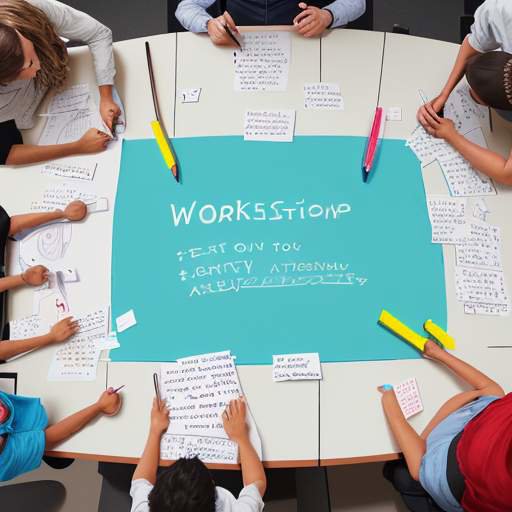
The Power of Physical Presence: Furthermore, the value of physical, in-person interaction—the spontaneous brainstorming session, the mentor’s guiding presence, the collaborative whiteboard session—cannot be replicated by a screen. These moments build social capital and deep understanding that technology cannot touch.
The Lifelong Learner Mindset: Adaptability as Currency
Perhaps the most critical skill of all is the metacognitive skill: the ability to learn how to learn.
The shelf life of technical knowledge is rapidly shrinking. A programming language that is cutting-edge today might be obsolete in five years. Therefore, the goal of education must shift from delivering a fixed body of knowledge to cultivating a flexible, resilient mindset.
This means embracing intellectual humility—the recognition that you do not know everything, and that the most valuable thing you can learn is how to acquire the next piece of knowledge.
The modern student must become a self-directed learner, constantly curating their own educational path. They must be comfortable with ambiguity, viewing failure not as an endpoint, but as a data point necessary for the next iteration of learning.
This commitment to continuous upskilling is what defines the successful professional in the AI age. It means viewing education not as a four-year destination, but as a perpetual, personalized journey.
Conclusion: Becoming the AI Conductor
The AI revolution is not a threat to education; it is a massive, overdue curriculum overhaul. It is forcing us to finally acknowledge that human intelligence is not defined by its capacity to store facts, but by its capacity to apply judgment, empathy, and creativity.
For students, the mandate is clear: Do not treat AI as a cheat sheet; treat it as a hyper-powerful, tireless research assistant that needs precise direction. Master the art of asking the right questions, rigorously verify the answers, and always bring the uniquely human elements—the ethical consideration, the emotional depth, and the audacious creative leap—to the table.
For educators and parents, the challenge is to redesign the classroom. The focus must shift from grading the answer to grading the process—the process of critical inquiry, ethical deliberation, and skillful interaction with advanced tools.
The modern student must evolve from a mere recipient of knowledge into a conductor of intelligence, capable of orchestrating human insight with machine power to solve problems previously deemed impossible. This is the skill set that will define the next generation of leaders, innovators, and thinkers.