The history of education is a story of adaptation. From the shift from oral traditions to the printing press, and later to the advent of the internet, learning has always been a process of mastering the tools of its time. But today, we stand at the precipice of the most profound technological transformation since the industrial revolution: the AI revolution.
Artificial Intelligence is no longer a concept confined to science fiction; it is a powerful, pervasive tool that is already reshaping industries, economies, and, most critically, the classroom. Tools like ChatGPT, Midjourney, and advanced data analytics platforms are fundamentally changing how knowledge is accessed, synthesized, and even created.
For students, this presents both an unprecedented opportunity and a profound challenge. The skills that guaranteed success in the 20th century—rote memorization, standardized testing, and the ability to recall facts—are rapidly becoming obsolete. AI can retrieve and synthesize information faster and more accurately than any human ever could.
So, if AI handles the information retrieval, what is left for the student?
The answer is that the focus must shift from what students know to how they think. The new educational mandate is not to teach students about AI, but to teach them with AI. We must equip them not just with knowledge, but with a sophisticated, resilient, and adaptable set of meta-skills—the skills that allow them to thrive in a world where the definition of "hard work" is constantly being rewritten by algorithms.
This comprehensive guide will explore the critical skills students must master to navigate the AI era, ensuring they are prepared to be creators, ethical leaders, and adaptive problem-solvers, rather than mere consumers of technology.
The Paradigm Shift: Understanding AI’s Role
To prepare students for the future, we must first understand the nature of the shift itself. AI is not merely a faster calculator; it is a cognitive partner that automates cognitive tasks. When a student uses an AI writing assistant, they are not just getting an essay; they are outsourcing the initial drafting, the structural organization, and the grammatical polishing. This efficiency is a double-edged sword.
On one hand, AI democratizes access to sophisticated tools, allowing a student in a rural area to access the quality of assistance previously limited to elite institutions. On the other hand, it risks fostering intellectual dependency. If students rely on AI to structure their arguments or solve complex equations without understanding the underlying logic, they risk developing "cognitive atrophy"—a weakening of the very mental muscles education is supposed to build.
The educational response cannot be prohibition; it must be integration and redefinition. We must teach students to view AI not as a cheating mechanism, but as a sophisticated, highly powerful research assistant, a brainstorming partner, and a first-draft generator. The skill, therefore, is to master the art of prompting and curating.
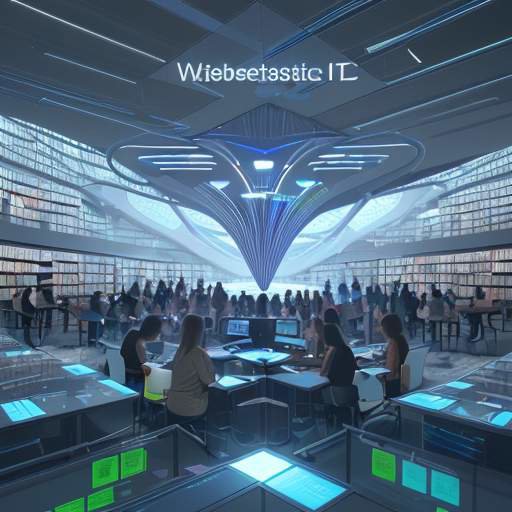
This foundational understanding requires educators to move away from content delivery models and toward facilitation models. The goal of the modern curriculum is to teach students how to learn from the machine, rather than just what to learn.
Critical Thinking & Prompt Engineering: The Art of Asking
If AI is the engine, critical thinking is the steering wheel. The most valuable skill in the age of AI is the ability to ask the right questions and to rigorously evaluate the answers received. This skill set has a formal name: Prompt Engineering.
Prompt engineering is the practice of structuring inputs (prompts) to large language models (LLMs) to elicit the most accurate, relevant, and useful outputs. It is a highly specialized form of critical thinking. It demands that the user understand the model’s limitations, its biases, and its underlying assumptions.
A poor prompt yields a generic, superficial answer. A masterful prompt—one that defines the persona, sets the constraints, specifies the desired format, and provides necessary context—yields a tailored, expert-level response.
Teaching prompt engineering is teaching metacognition—thinking about one’s own thinking. Students must learn to:
- Deconstruct the Problem: Before asking AI anything, they must break down the complex problem into manageable components.
- Define Scope and Constraints: They must tell the AI, "Act as a 19th-century historian, writing a 500-word analysis, focusing only on economic factors, and using formal, academic language." This precision is the hallmark of expert thinking.
- Iterate and Refine: They must treat the AI’s first output as a draft, not a final product. They must ask follow-up questions like, "Now, challenge that argument with counter-evidence," or "Provide three alternative viewpoints."
This process transforms the student from a passive recipient of information into an active, demanding editor and intellectual director. It is the ultimate synthesis of research skills and digital literacy.
Ethical Literacy and Digital Citizenship: Navigating the Minefield
As AI becomes more powerful, the ethical stakes rise exponentially. Students must graduate not only as skilled technicians but as morally grounded citizens. This requires developing "Ethical Literacy"—the ability to identify, analyze, and mitigate the ethical implications of technology.
The primary ethical challenges presented by AI are threefold: bias, plagiarism, and data privacy.
1. Recognizing Bias: AI models are trained on massive datasets scraped from the internet. If the internet contains historical, racial, or gender biases, the AI will absorb and reproduce those biases. A student must learn to treat AI output with deep skepticism, asking: Whose perspective is missing here? What assumptions are built into this data set? This requires a deep understanding of systemic bias.
2. Academic Integrity and Authorship: The debate around AI-generated content and plagiarism is ongoing. Instead of banning AI, education must teach responsible authorship. Students need to understand that using AI to generate an entire paper is plagiarism, but using it to refine an outline, check sources, or generate multiple perspectives for brainstorming is a legitimate, advanced use of technology. The focus shifts from originality (which AI can mimic) to original thought and critical curation (which only the human can provide).
3. Data Privacy and Digital Footprint: Students must become fiercely protective of their personal data. They need to understand how the data they input into free AI tools is used, stored, and potentially monetized. Digital citizenship in the AI era means being a mindful participant, not a naive provider of data.

Adaptability and Continuous Learning: The Growth Mindset
Perhaps the single most important skill for the 21st century is not a technical one, but a psychological one: the capacity for continuous, rapid adaptation.
The shelf life of specialized knowledge is shrinking. A career path that was stable for 30 years might be completely automated in 15. Therefore, the student must internalize the concept of being a "lifelong learner." This means embracing intellectual discomfort and viewing failure not as an endpoint, but as necessary data for the next attempt.
This requires cultivating a "Growth Mindset," a concept popularized by Carol Dweck. Instead of believing that intelligence is a fixed trait ("I am bad at math"), the student learns to believe that intelligence is a muscle that can be strengthened through effort and strategy ("I haven’t mastered this concept yet").
To foster this adaptability, educational environments must:
- Prioritize Interdisciplinarity: Learning should not be siloed. A student studying biology should be encouraged to use AI to model economic impacts, and a student studying history should use AI to simulate political decision-making. The ability to connect disparate fields is the hallmark of true innovation.
- Embrace Project-Based Learning (PBL): PBL forces students to solve messy, real-world problems that do not have a single, textbook answer. They must manage ambiguity, collaborate with diverse teams, and accept that the first solution will likely be wrong.
- Develop Resilience: Students need explicit training in dealing with cognitive overload and information fatigue. Learning to filter the signal from the noise—a skill AI can generate but not filter for the human—is paramount.
The Educator’s New Role: Guiding the AI Journey
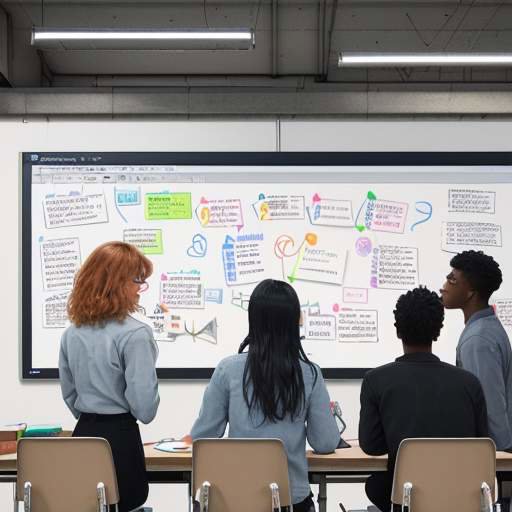
The responsibility for preparing students for this revolution does not rest solely on the student; it falls heavily on the educational system and the teacher. The role of the educator is undergoing a fundamental metamorphosis—from being the primary source of knowledge to becoming the chief curator, mentor, and coach.
The teacher must now be an expert in guiding the learning process, not just the content. This involves several critical shifts:
1. Curriculum Reimagination: Curricula must be overhauled to dedicate significant time to computational thinking, data literacy, and ethical AI usage. These skills should not be electives; they must be woven into every subject—from analyzing the bias in historical texts (History) to modeling ecological collapse (Science) to drafting policy proposals (English).
2. Modeling Vulnerability: Teachers must model the process of learning with AI, openly discussing when the AI is helpful and when it is dangerously wrong. By demonstrating their own critical process—"The AI suggested this, but let’s verify it using three different primary sources"—they normalize intellectual humility and rigorous skepticism.
3. Fostering Human-Centric Skills: As machines take over the mechanical aspects of work, the value of uniquely human traits skyrockets. Educators must intentionally cultivate empathy, emotional intelligence (EQ), complex communication, and creative leadership. These are the skills that cannot be automated.
The teacher becomes the architect of the learning environment, designing challenges that force students to use AI as a tool, rather than allowing the tool to define the challenge for them.
Conclusion: The Human Edge
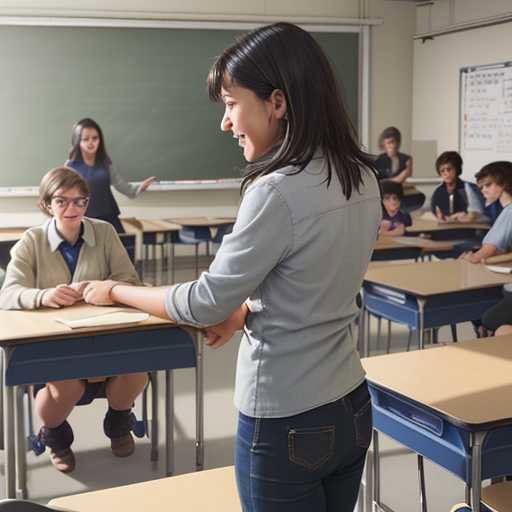
The AI revolution is not a threat to education; it is a massive, irreversible catalyst for evolution. It is forcing us to finally confront the difference between information and wisdom.
Information is what AI excels at providing. Wisdom—the ability to synthesize that information with ethical consideration, human empathy, and creative judgment—remains uniquely ours.
For students, the journey ahead requires a conscious pivot. They must move from being passive knowledge receptacles to becoming active, skeptical, and highly adaptable intellectual architects.
The skills for tomorrow are not found in a textbook; they are forged in the crucible of critical questioning, ethical debate, and relentless curiosity. By mastering prompt engineering, embracing ethical literacy, and maintaining an unshakeable commitment to continuous learning, today’s students will not merely survive the AI revolution—they will lead it, defining the next chapter of human ingenuity.
The future belongs to those who know how to partner with the machine, while never forgetting the irreplaceable value of the human mind.